What is the current requirement for gambling taxes in Ireland? What is proposed next, and what happens to your bankroll? CasinoAlpha IE answers all these questions in simple terms.
Irish Gambling Taxes Guide
By Elena Buzincu

Table of contents
Do Irish Players Need to Pay Taxes on Their Gambling Winnings?

The short answer is no. The Revenue Commissioners, Ireland’s tax and duty authority, only collects taxes from gambling operators.
Gaming
In Irish legislation, gaming means playing something involving skill, chance, or both. Gaming includes Slot sites, Live casinos, and casino games like Roulette or Blackjack, but it excludes sports betting. Regardless of the game, anything that falls into this category involves no fees for the player, and no maximum limits are specified.
The Hakki Decision Summary
- A professional online poker player consulted a professional to see whether he needed to pay taxes for his casino winnings or not, as he was in the middle of a child support trial
- Hakki played at casinos 3-4 days per week, sometimes spending the entire day there
- His lawyer argued that he was not organised enough for his activity to be regarded as a trade or profession
- The Revenue Commissioners approved, and it was determined that the player’s winnings were non-taxable
Many players are confused regarding Irish gamblers’ taxes, and the existence of the Hakki Decision proves it. Despite taking place in the UK, the argument made by Hakki’s lawyer could also be used in a trial involving Irish players’ taxes on gambling. This is because UK and Irish laws and principles regarding gamblers’ taxes are almost identical.
Betting
At the moment, the definition and limits of a bet have to be determined in court from case to case. In terms of taxes, bettors are exempt from Capital Gains Tax (CGT) and Value Added Tax (VAT). The main wager tax currently perceived is valued at 1%. Unlike previously, when it was collected directly from the bettor, the 1% tax is now imposed on betting companies.
Spread betting
A spread bet allows the customer to speculate on stock and share fluctuations without buying any stocks or using a stockbroker.Spread betting is not subject to Income tax, Capital Gains Tax (CGT) or Stamp duty. For now, spread bets should be tax-free for bettors.
Lottery
Lottery winnings are entirely tax-free in Ireland, but
- If you earn income by investing lottery wins, then the named income is taxable
- When the winnings are gifted, a Capital Acquisitions Tax (CAT) may have to be paid
- The same Capital Acquisitions Tax (CAT) may apply to inherited lottery winnings
Offshore Gambling Laws

Offshore gambling providers whose activities fall under Irish gambling laws must request the same licenses from the Revenue Commissioners as Irish operators. Here are the licenses that providers can apply for a Remote bookmaker’s license or a Remote betting intermediary’s license.
What happens to casino service providers?
- The contracts between offshore casino operators and Irish customers shouldn’t be governed by Irish law
- If they aren’t governed by Irish law, there are no Irish players’ taxes on gambling
- Until Irish law includes online casino services, online casinos can’t be registered by the Revenue Commissioners unless they also provide betting services
- For now, Ireland’s best casinos have licences from reliable authorities such as the UKGC or MGA.
Gambling Provider Taxes Explained
Excise duty
Excise duty is a tax usually imposed in addition to an indirect tax, such as the VAT. The Irish excise duty is legally stipulated for operators that provide bookmaking and gaming, among other services. The Revenue Commissioners can issue the Gaming and Amusement Excise Licence and the Excise Licence based on Turnover, also known as the Remote Bookmaker’s Licence and the Remote Betting Intermediary’s Licence.
The two main licence categories
For the second category, Irish taxes vary depending on the operator’s annual turnover.
Remote Bookmaker’s Licence
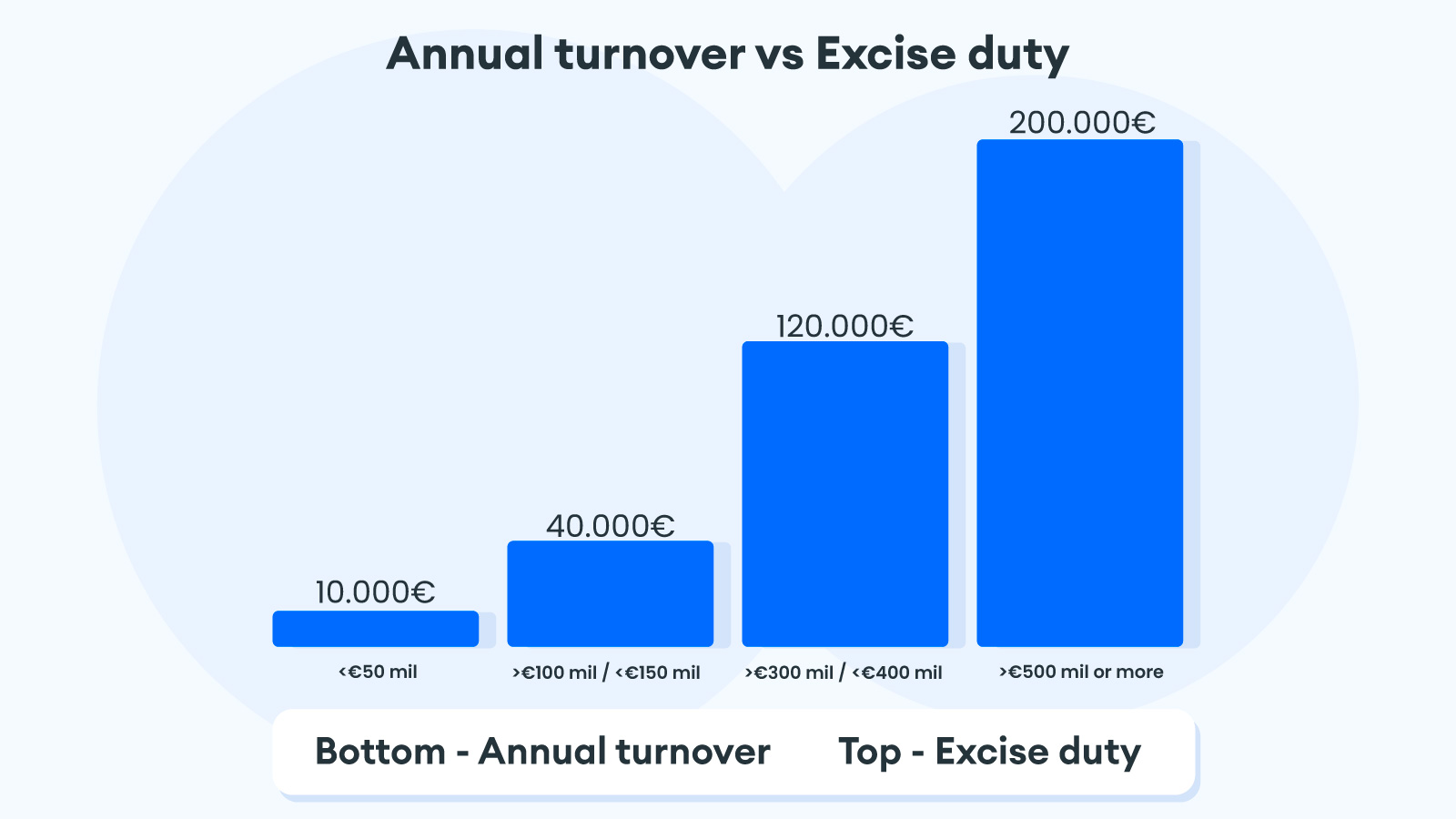
Remote Betting Intermediary’s Licence
Can Legal Gaps Affect Your Casino Winnings?
To understand why, let’s look at the Gaming and Lotteries Act (1956). In Section 36, this act regards all gambling and wagering-related contracts as void. This means that no such contract is recognised by Irish law. If they are not valid, the contracts cannot be enforced in court.
What consequences does this regulation have?
If gambling contracts are null, then both players and operators are deprived of receiving gambling debts. To see how players get to win in the first place, read our comprehensive RNG guide.
Are gambling debts enforceable?
No, they’re not. Now that you’ve read the theory, we can discuss how the 1956 regulation works in practice.
The Sporting Index Ltd v O’Shea case:
- John O’Shea placed an online bet on a rugby match, and it turned out to be unsuccessful.
- His account got overdrawn, which resulted in gambling debts.
- The platform sued and obtained two judgments in their favour: one of €118.000 and another of £17.500.
- John O’Shea defended himself using the regulation in Section 36, which states that all gambling and wagering-related contracts are void.
- He also used a European Council regulation. If applied, the reason would be that judgments given in other EU states can’t apply in Ireland if they go against its public policy.
- Sporting Index Ltd argued that the Irish court only had to recognise the previous court order, not the gambling debt itself.
- The Irish court concluded that both were connected, so the previous court order could not be recognised, and the debt could not be enforced.
If you don’t want to get caught up in such a dispute, always turn to reliable Ireland casino reviews before choosing a platform to play on.
How New Tax Regulations Will Impact Players
While the current Irish gambling regulations seem pretty out of date, the near future is promising. An official gambling authority is set to oversee the operators’ activity and assess the possibility of making a complaint regarding the operator. There is also potential for better safety and advertising regulations.
The Irish gambling authority
- It will be the only authority to issue licences and to establish appropriate Irish taxes for licensing.
- It will handle monitoring activities and on-site inspections, along with other types of verifications.
- It must inform the public regarding Irish players’ taxes on gambling, regulations, and services.
- The authority also has to supervise the standard anti-money laundering practices.
Complaints regarding providers are based on:
- The operator’s conduct
- A service, activity, or product supplied by the operator
- The operator’s breach of any regulation imposed by the authority or through the Gambling Regulation Bill
Safety measures
Licence holders are not allowed to extend any loan or credit to a player, and ATMs cannot be placed on the premises of a gambling facility. Operators must raise awareness of how to stop gambling addiction using responsible gambling tools. Also, all operators must impose limits that ensure player protection, such as spending limits.
Understanding Gambling Fee Structures
Along with the publication of the Gambling Regulation Bill, fees and taxes may change. When establishing licence fees, the new authority will consider:
- The types of gambling provided by the operator;
- The operator’s turnover;
- The size of the operations;
- Any other criteria the authority regards as relevant.
Since there aren’t many criteria to check if you want to see whether a casino platform is safe for Irish players, here’s a complete list of online casinos in Ireland, which we’ve already verified.
References
Meet Our Experts

Author
Elena Buzincu
Senior Author & Editor
Since joining our team in 2017, Elena Buzincu has built a reputation for testing out new games, registering an impressive number of 3,000 tested and benchmarked slots over dozens of platforms. Her portfolio of 87 articles touches multiple topics, including international licensing frameworks and breakdowns on the dangers of underage gambling.

Recommended Articles

Why Irish Players Are Getting the Short End of the Bonus Stick
Irish players often get second-class casino bonuses: lower match rates, tighter expiry timers, and harder-to-clear wagering terms. In fact, 37% of Irish-targeted bonuses come with stricter conditions than those offered elsewhere in Europe. Our CasinoAlpha experts tested dozens of casinos and uncovered how, why, and where this discrimination happens. In this article, we break down the tactics casinos use, and how Irish players can fight back with facts.
By Elena Buzincu

KYC Procedure: How to do it
Based on CasinoAlpha IE’s comprehensive analysis of casino KYC processes across Irish gambling platforms, we’ve found that players who proactively complete their verification during registration typically enjoy withdrawal processing times that are 3-4 days shorter than those who delay. Discover how to streamline your KYC compliance and significantly reduce waiting periods for your winnings.
By Anca Iamandi

How to stop gambling addiction
How to stop gambling addiction in Ireland is a question more players are asking, especially after financial losses or repeated relapses. Around 1 in 30 Irish adults show signs of problem gambling. “People think quitting is about willpower. It’s really about routine and access,” says our Chief Editor and CEO, Tudor Turiceanu. This guide gives you a structured path forward, one that includes blockers, mindset shifts, and zero shame.
By Elena Buzincu

Is Online Gambling Legal in Ireland?
In our newest legal guide, you will learn exactly whether online gambling is legal in Ireland. You will find out about the GRAI, the offshore casino’s status and more. Read on and learn!
By Adela Mariuta

Casino Fairness in Ireland
The harsh reality of casino fairness is that many operators implement “near-miss” programming and volatility adjustments that technically maintain stated RTPs while creating artificially frustrating player experiences. Know how to identify truly fair gaming environments and avoid operators using psychological manipulation.
By Adela Mariuta
Most Read
1.