



GDPR and Irish Online Casinos: Your Data Privacy Rights
All the information in this page was checked by:

Every piece of information we present is rigorously verified by our team of experts using multiple credible sources, ensuring the highest level of accuracy and reliability.
We have paid partnerships with the online casino operators featured on our site. We also earn commissions when you, the user, click on certain casino links. These financial partnerships do not affect our reviews, recommendations, or analysis. We remain committed to delivering unbiased gambling reviews.
Learn moreIn our newest legal guide crafted carefully by our team of legal specialist at CasinoAlpha, you will find everything on the GDPR and online casinos in Irelad. Spoiler alert: thanks to Act 2024 and GRAi you will have a new Irish enforcer in town called DPC or Data Protection Comission. Don’t worry, we highlighted everything so you don’t have to. Just read the legal guide and find out about your data rights in 2026.
- GDPR: Ireland’s Strongest Player Data Protection
- Your 8 Core GDPR Rights at Online Casinos
- What Data Do Casinos Collect?
- GDPR Enforcement: Data Protection Commission
- Data Breaches: Casino’s GDPR Obligations
- GRAI and GDPR: Dual Oversight
- Practical Tips: Protecting Your Data at Casinos
GDPR: Ireland’s Strongest Player Data Protection
Since Ireland is in the EU, it benefits from GDPR which translates to General Data Protection Regulation. This is the World’s strictest data privacy law, and it started on May 25, 2018. So, this GDPR grants Irish players with significant data rights that players in non-EU countries don’t have such as Canada, US, Australia, etc.
What GDPR means for you: Every casino you will play at, whether GRAI-licensed or offshore (UKGC, MGA, etc.) must comply with GDPR when they process your data.
Let’s see some differences between GDPR vs non-EU privacy:
| Privacy Framework | Geographic Scope | Data Rights Strength | Penalties for Violations |
|---|---|---|---|
| GDPR (Ireland/EU) | EU member states + EEA | Strongest globally – 8 core rights | Up to €20M or 4% global revenue (whichever higher) |
| PIPEDA (Canada) | Canada | Moderate – 10 principles | Administrative penalties, no percentage-of-revenue fines |
| CCPA (California) | California, US | Moderate – opt-out rights | Up to $7,500 per violation |
| UK GDPR (post-Brexit) | United Kingdom | Strong (mirrors EU GDPR) | Up to £17.5M or 4% global revenue |
Irish Advantage: For example, GDPR’s €20 million (which is a 4% global revenue penalty) created a high compliance incentive. For this, casinos take GDPR seriously because violations can destroy businesses.
Disclaimer: The information below is for educational purposes only and pertains to the general data protection regulation (GDPR) as it relates to online casinos catering to Irish players as of January 2026. It does not constitute legal advice. Regarding various data privacy issues, please contact the Data Protection Commission (Ireland) via dataprotection.ie or a qualified solicitor.
Your 8 Core GDPR Rights at Online Casinos
So, we identified that GDPR gives Irish players 8 fundamental rights over personal data casinos can collect:

1. Right to Be Informed (Transparency)
What it means: Casinos are required to inform users of what information they collect, why they collect this information, how this information is used, and with whom this information is shared (for example, with payment processors, game providers, or government).
How casinos comply: You must agree to the “Privacy Policy”, which is available in the footer of the site. The language is easy to read, not the complex language of lawyers. You cannot be asked to agree to the policy after signing up since the policy must be available beforehand
Your action: Check out the privacy policy before depositing money. If a casino has no such policy or keeps it a secret, that’s a red flag; choose a different casino.
2. Right of Access (Subject Access Request)
You can ask for a complete presentation of all of your personal data the casino collected about you.
What you can request:
- Account details such as name, address, email, phone, DOB, etc.
- You can ask for casino your data on deposits, withdrawals, payment methods, or transaction background
- You can even ask for gameplay data, meaning the games you played, the bet amounts, wins/losses, session times, etc.
- Communication records (support chats, emails, phone calls)
- Marketing data (preferences, email open rates, click behavior)
- Verification documents like copies of ID, address proof uploaded or others
How to request:
- Email casino: [email protected] or [email protected] (Data Protection Officer)
- Subject: “GDPR Subject Access Request – Account [Your Player ID]”
- Provide the following: Name, account details, and government ID
- Casino must respond within 30 days [1]
- The casino will give you the data in readable format, like documents in PDF, CSV, etc.
Cost: The first request is free, but if you make excessive requests, the casinos will charge a fee.
3. Right to Rectification (Correction)
The right to rectification means that if the casino has collected incorrect info on you, you can request correction immediately. For example, if you name aws misspelled, or if you gave your old address on file or the wrong phone number, you can always contact the customer support to fix that.
4. Right to Erasure (“Right to Be Forgotten”)
The right to erasure concept is easy to understand because it basically means the right to be forgotten. In simple words, this means that you can request the casino to delete your personal data, but only in certain situations:
- If you close the account and the data is no longer neeed
- You withdraw consent for marketing data
- If the data was processed unlawfully
- If your legal obligation requires deletion
Limitations: Keep in mind that casinos can refuse to erase your personal data if they need that exact data for legal purposes. For example, anti-money laundering regulations need to keep the banking data for 5-7 years
How to request:
- Close casino account
- Email: “GDPR Erasure Request – Account [ID]”
- Casino confirms deletion timeline
- Data deleted after legal retention period (typically 5-7 years for financial records)
Reality: However, the immediate deletion is rare due to AML/tax retention requirements. Still, the marketing data, or the gameplay logs will be deleted immediately after you request it.
5. Right to Data Portability
The “right to data portability” means that every casino must provide your data in machine-readable format, such as CSV, JSON, and they can transfer it to another casino if you request it. However, we saw that not so many casinos use java this import functionality, which means data portability right exists, but the practical use is somehow limited.
6. Right to Restrict Processing
Probably the best right you can have is the right to restrict processing because this right lets you request the casino to limit how they can use your data in given situations. You can dispute the casino’s claim that you violated the bonus policy, and in this casino you can request processing restrictions while the dispute is investigated. In this scenario, casinos must pause using the data.
7. Right to Object
The “right to object” principle means that you can decline the casino processing your data for certain goals such as marketing profiling. For example, you can ask the casino to stop sending you daily messages about the newest promotions. Keep in mind that this situation is different from the usual “unsubscribe” approach because GDPR is stronger than a simple feature.
8. Rights Related to Automated Decision-Making
The rights related to automated decision-making mean you have the right to avoid being a subject based on automated processing like profiling that affects you. For example, if an AI used by the casino automatically closes your account due to “bonus abuse” without a prior human review, you can challenge this under GDPR. Do not forget: automated decisions that can affect you must come with human supervision.
What Data Do Casinos Collect?
| Data Type | What They Collect |
|---|---|
| Identity Data | Full name, birthdate, residence, nationality, government identification (driver’s licence, passport), and documents proving residency. |
| Financial Data | Information about the payment method (last four card numbers and e-wallet accounts), transaction history (deposits, withdrawals, amounts, and dates), bank account information for withdrawals, and the source of funds for significant transactions. |
| Gameplay Data | They can collect details on the device you use, win or loss history, max or low bets amount, geo location, etc. |
| Communication Data | Transcripts of customer service chats, emails, phone conversations, and complaint histories. |
| Marketing Data | Casinos can collect data on how many times you opened the email, click through habits, how to claim bonuses, or what are your marketing inclinations. |
| Behavioral Data | They can also collect fingerprints on your patterns of login, how you use responsible gambling tools, etc. |
GDPR Enforcement: Data Protection Commission
In Ireland there’s a Data Protection Commission which helps GDPR to supervise and enforce the actions even more. Let’s see the DPC’s powers:
- DPC investigates GDPR made by Irish citizens
- This commission audit casino data practices in IE
- They can order casinos to change personal data collection approach
- They can give fines up to €20M.
- If there are serious violations, the DPC can refer to courts for criminal prosecution.
Data Breaches: Casino’s GDPR Obligations
Another significant situation is when casinos suffer data breaches, such as hacking, data leaks, etc. In these situations, GDPR mandates strict notification requirements:
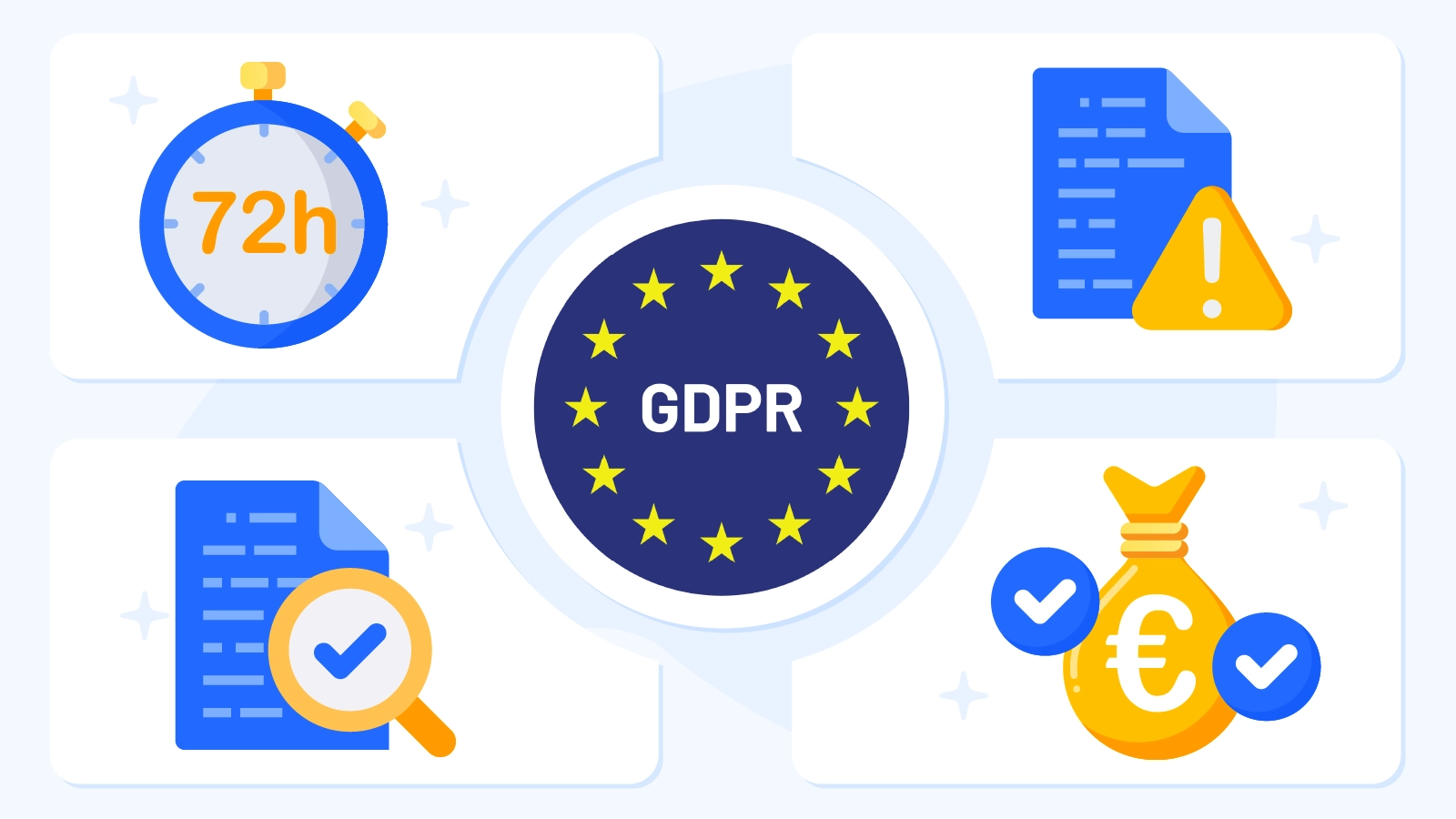
- Notify DPC in 72 hours of discovering the breach
- They must notify all of the affected players if breach creates high risk to freedom or rights
- They need to explain what data was compromised when the hack occurred and what the casino is doing to fix it and what the player should do.
What Are Your Rights After the Breach?
- You can request details on the event
- If the casino didn’t manage to protect your data, you can file a GDPR complaint with DPC.
- You can pressure compensation for damages (if the breach caused monetary damage, identity theft or fraud)
GRAI and GDPR: Dual Oversight
Thanks to GRAI and Act 2024, you will have a dual GDPR oversight via DPC. The GRAI’s role is to ensure that licensed casinos comply with Act 2024 data protection provisions, such as segregated customer accounts, secured data storage, age verification handling, etc.
The DPC’s role is to enforce GDPR 8 rights with data breach notification, lawful processing, security measures, etc.
So, both authorities will investigate data violations. However, GRAI is focused on gambling-specific data situations while DPC handles broader GDPR regulations such as marketing data, profiling, general data rights, etc.
With this double protection, you’re all safe in the Irish online gambling area, especially your data.
Practical Tips: Protecting Your Data at Casinos
However, if you don’t want to experience data breaches or things like that, see how you can protect yourself:
| What to Do | Why It Matters |
|---|---|
| Don’t use the same password | If the casino you are playing at right now is being hacked, the other casinos are safe, but if you use the same password, they can steal from you because you used the same password. |
| Turn 2FA | Some casinos offer 2FA through SMS or an app. It’s an extra step when logging in. Thanks to 2FA, nobody can access your account, ever. |
| Provide only what’s legally needed | Casinos need your ID, address, and payment details. Anything beyond that? Don’t share! |
| Read the privacy policy before | Check how they use your data. If they’re selling it to third parties, go to a different site. |
| Request your data once a year | To check if the casino are collecting more than they should, make sure to request this one a year. |
| Object to marketing instead of just unsubscribing | Unsubscribe buttons don’t always work. Use your GDPR Article 21 right to object. This will work 100% |
| When you close account, ask them to delete you | Casinos have to keep some records for legal reasons, but they should delete the rest. GDPR will help you on that |
Sources
- [1] Data Protection Commission (Ireland), “Your Rights under the GDPR”
http://www.dataprotection.ie/en/individuals/rights-individuals-under-general-data-protection-regulation - [2] GDPR, Regulation (EU) 2016/679
https://gdpr.eu/ - [3] Gambling Regulation Act 2024, Section 64 (Data Protection Restrictions)
https://www.irishstatutebook.ie/eli/2024/act/35/enacted/en/html
F.A.Q.
Can I actually force a casino to delete my account data?
Yes, but subject to certain circumstances. The GDPR’s Right to Erasure gives you the power to initiate the deletion process once the account is closed. However, the law also states that casinos, which operate under anti-money laundering legislation, have to retain financial records like deposit, withdrawal, and money transfer records for 5 to 7 years. What do we delete immediately? Data collected for marketing, game logs, and communication records. Financial records will be deleted after the applicable time limit. How does the process of requesting data deletion work? Close the account, and then send an email to the casino’s Data Protection Officer, stating ‘GDPR – Erasure Request’ in the title bar of the email.
What happens if a casino gets hacked and my data leaks?
Note that the casino has 72 hours to alert Ireland’s Data Protection Commission once they discover the breach. If the breach puts you at high risk (like your ID documents or payment details were exposed), they must notify you directly and explain what data was compromised, when it happened, and what you must do.
How do I stop casinos from bombarding me with promotional emails?
In this situation, the “unsubscribe” button doesn’t help much, but here comes the GDPR. Thanks to the principle of a “right to object”, you can use GDPR to make the promotional emails stop once and for all.