Having tested progressive betting systems at major Irish casinos for over a decade, I can confirm that the Fibonacci sequence offers no mathematical advantage over random betting. However, when applied correctly with proper money management, it can provide structured gameplay and controlled betting progression. This guide explains the best way to implement the system while avoiding common pitfalls.
Fibonacci Sequence in Roulette: Does This System Work?
By Adela Mariuta
Table of contents
Understanding the Fibonacci Sequence
The sequence is a series of numbers representing your stake for Roulette bets.
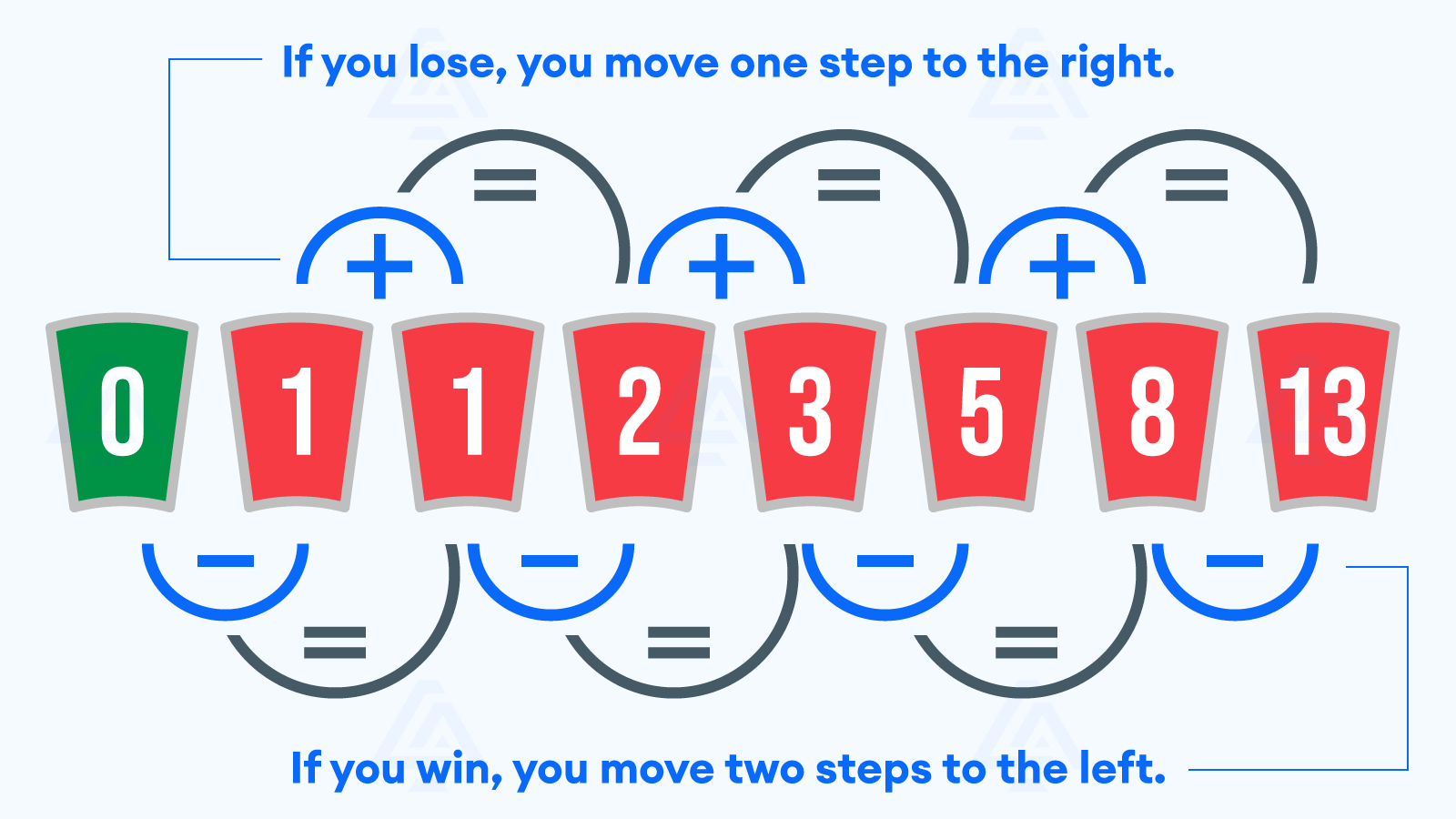
The strategy is based on a negative progression, so you must up the wager when you lose. Even if the Fibonacci sequence can start with a zero, it mostly begins with 1 unit: 1-1-2-3-5-8-13-21, and so on. The Fibonacci Roulette strategy is used on even-money bets, meaning you should use the strategy when betting on high/low, or even/odd. It’s also used as a Roulette red or black strategy.
Let’s explain how to calculate the Fibonacci sequence:
- The system’s progression rule is that any next number is the sum of the previous two numbers.
- For each lost bet, you add up the previous numbers and thus obtain your next stake.
- When you win, you return two positions back in the sequence.
Here’s how to use the Fibonacci betting system:
You must start with a clearly defined betting unit. Our guides for Irish players keep reminding you to set a gambling budget and stick to it. You cannot use the system to determine the outcome of a Roulette game. For this, there are special Roulette number prediction methods explained by our lead expert in our designated guide. For this system to work, you must take these words seriously.
For example:
- Suppose you’ve just registered your account at a top online casino in Ireland. After you complete registration, you’ll likely make a deposit and start playing.
- Divide your bankroll by game type. Say you’re mainly a Roulette player, but you also like to indulge in slots every once in a while.
- Set apart 30% of your funds for slots and 70% for Roulette.
- For Fibonacci to work, you must start with the lowest betting unit available.
- The remaining funds should be further divided by 100 so you obtain your initial stake unit.
- Remember the progression: 1-1-2-3-5-8-13-21…
- The two 1-1 at the beginning of the sequence represent your betting unit.
- If you follow our tips, that unit should not exceed 1/100 of your bankroll.
- Depending on whether you win or lose, you will have to move back and forth.
- So, at some point, you may have to bet 21 units.
- Make sure betting 21 units won’t carve out too much of your bankroll!
- If your first wager is a win, remember you must restart the progression. You only add up numbers in case of a loss.
Other Roulette negative progressions we explain in our guides include:
- Martingale strategy
- Romanosky strategy
- D’Alambert system
- Labouchere progression
The Fibonacci strategy is arguably safer than the other negative progressions available. You add up your last two wagers instead of doubling your bet as with Martingale.
There are two scenarios where you can score a profit with Fibonacci:
- If the first wager is a win, you get a 1 unit profit. However, you then need to resume the sequence from square one.
- If the first bet is a loss, you continue betting until you get a win. Once a bet hits home, you adjust your stake size according to the second-previous number in the string.
This pattern continues until you return to the first number and bet amount.
Be aware: The further you go down the series, the bigger the losses, so exercise caution.
How to Apply the Fibonacci Strategy to Your Roulette Bets
This strategy, in action, aims to return to your initial stake and gradually prevent major losses. Based on our research and updated Roulette casinos list, most Roulette games allow you to use this strategy with all appropriate bets.
The first example of the Fibonacci system: even wins and losses
Let’s explain the Fibonacci Roulette strategy odds in the table
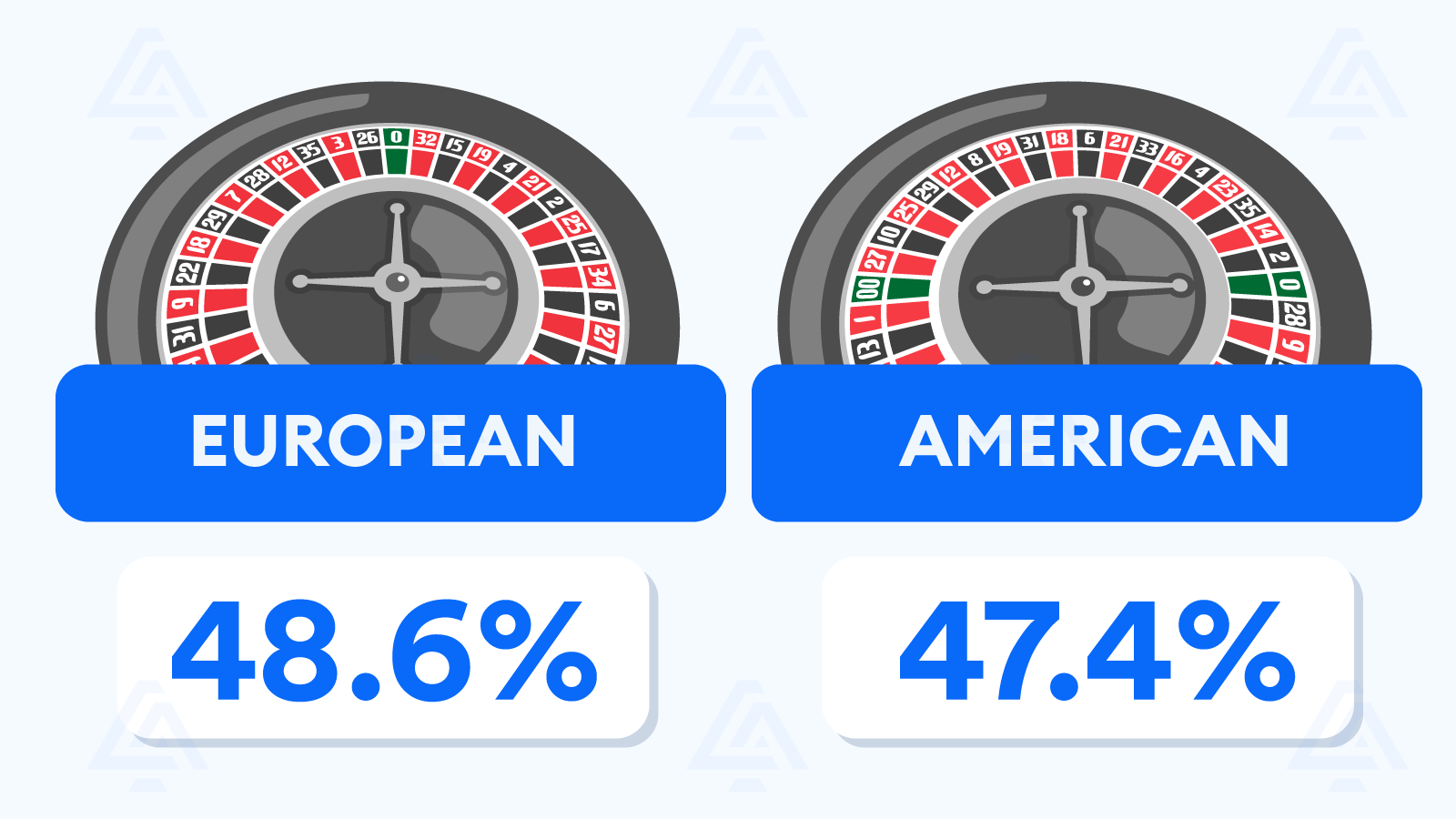
The only type of bet we are using for the system in Roulette is the even-money bet, with odds close to 50-50%. Placing wagers on red/black, even/odd, or high/low has real odds of 48.65% in European Roulette and 47.37% in American Roulette. Both types of Roulette bets payout at 1:1. For a more detailed approach, investigate our full European Roulette guide. Many of the top live dealer casino sites in Ireland that we tested and selected provide Roulette games and bonuses but forbid the use of strategies or limit the bonus bet amount as far as even-money bets are concerned.
The second example of the Fibonacci strategy: losing streak
A losing streak can be easier to take with this system. Remember the strategy works primarily as a way to avoid major losses. During 8 rounds of play according to the sequence, 5 were lost bets. In the end, despite the majority of bets losing, the overall bankroll change was not that significant. Practically, instead of losing 5 units for 5 lost bets, Fibonacci helped reduce those losses to 3 units.
The third example of the Fibonacci strategy winning streak
As the table shows, you won’t make significant profits when 6 out of 8 betting rounds return positive results. The rule states that, in case you start with a winning streak, every next bet will be at the minimum stake. Therefore, your profit will only increase slowly. The strategy’s main use is safeguarding your gambling funds!
What to Expect from the Fibonacci Roulette Strategy in the Long Run
- Because of the extra green zero, the even-money bet on Roulette doesn’t offer real 50-50 odds.
- However, it remains the best bet in Roulette in terms of odds.
- Even if you cannot completely bypass the house edge, using the sequence can help diminish losses. At the same time, though, you also diminish your potential returns.
The examples prove the main usage of this strategy is to mitigate the Roulette house edge. While you may get some profit if you follow the staking plan by the book, you shouldn’t raise your expectations too high.
How to calculate the expected value of this strategy:
- We only use even-money bets with this Roulette strategy, so we’re already at a disadvantage.
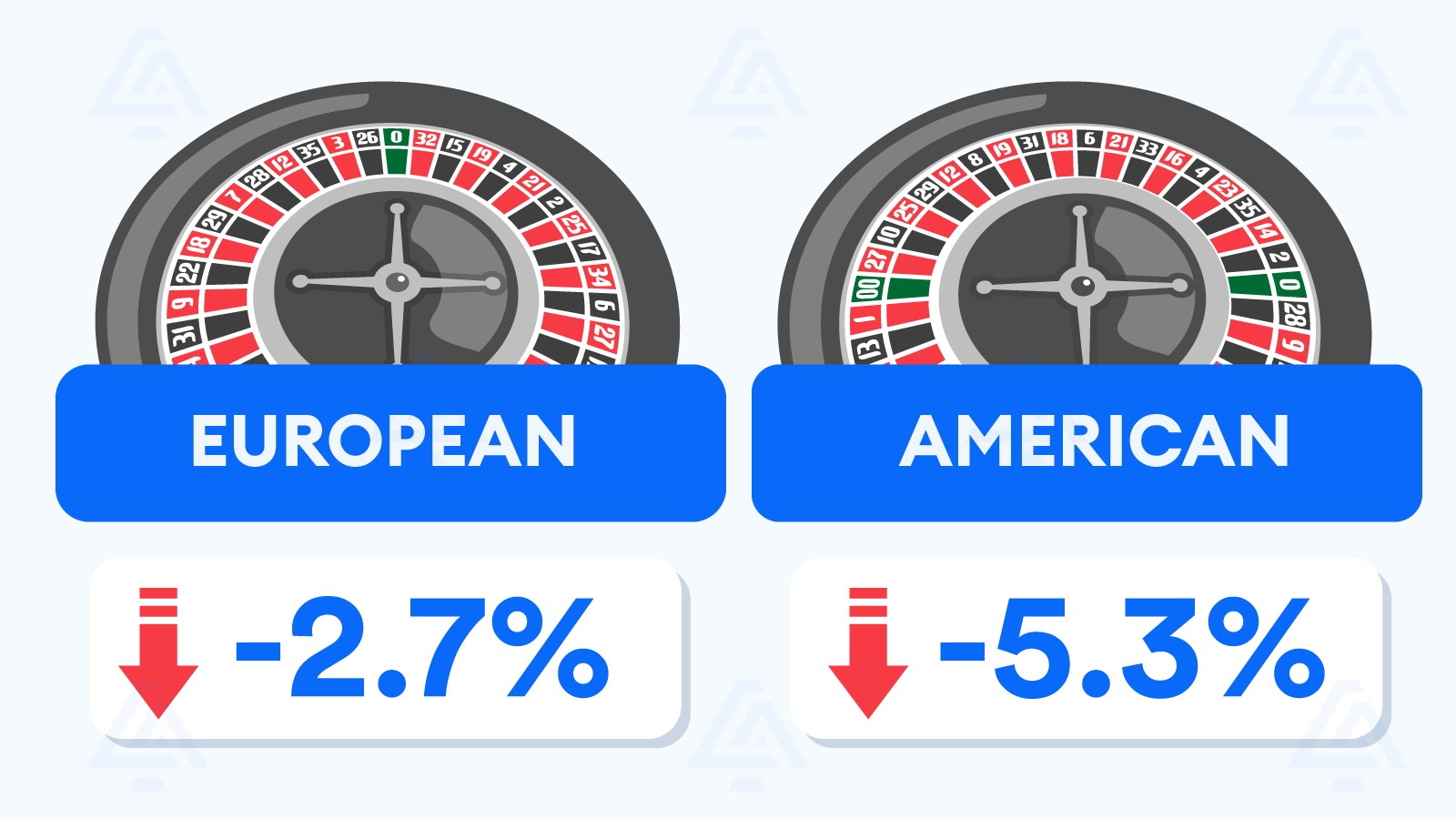
- Given the house edge, over an extended series of bets, we’re bound to lose 2.7% of the time at European Roulette and 5.3% at American Roulette, due to the difference in Roulette numbers and table layout, which influence the house edge.
- That means the expected value would be negative for a long enough series of bets.
Calculating the expected value can give you a rough estimate of how much you can potentially win or lose during your Roulette session.
The Alternative Reverse Fibonacci System
An alternative if you want faster returns is the reverse Fibonacci strategy.
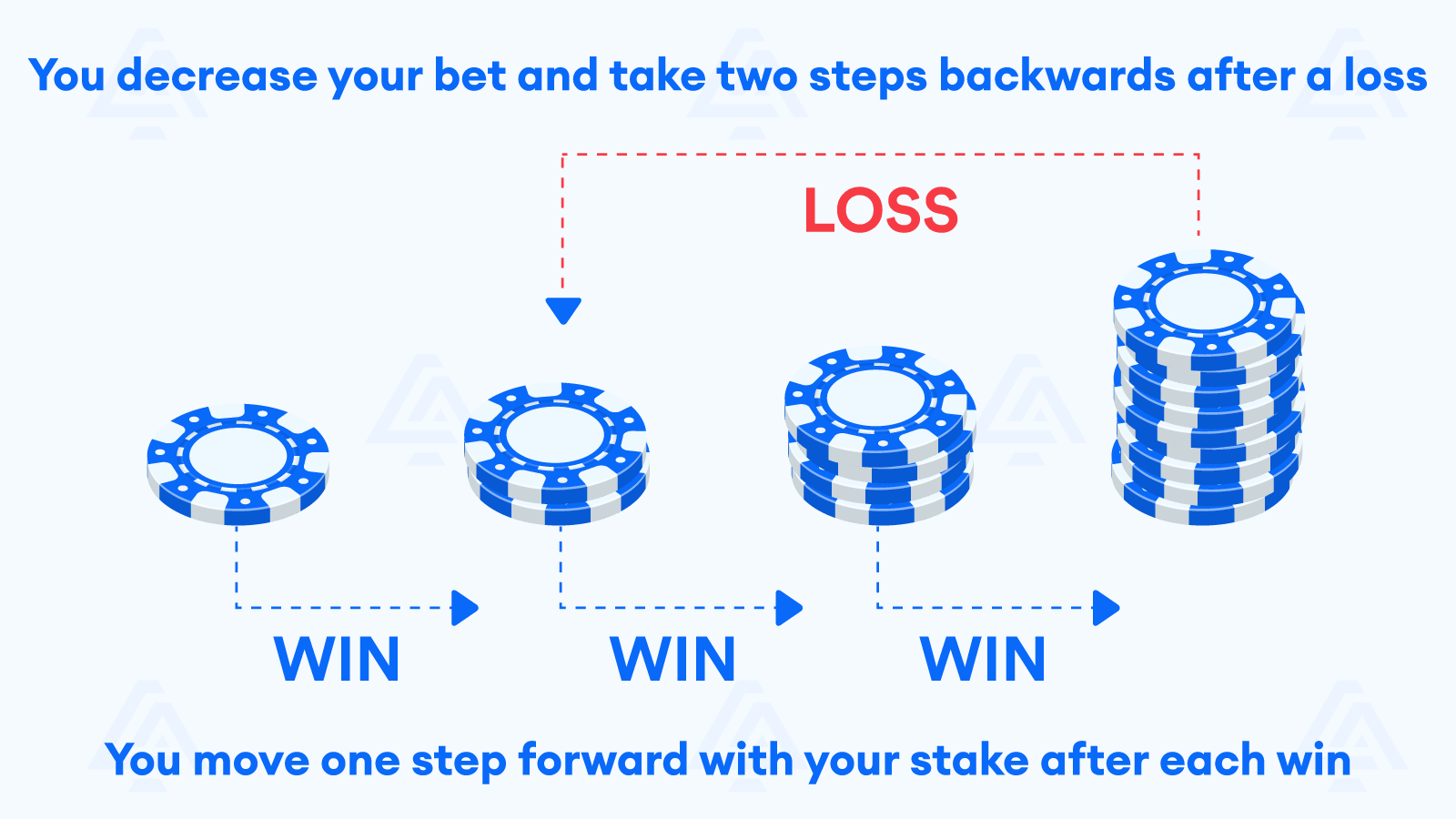
It literally involves taking the steps in reverse, so now we’re talking about a positive progression.
The reverse sequence rules are:
- You move one step forward with your stake after each win, instead of upping your wager when you lose
- In case of a loss, you decrease your bet and take two steps backwards
- However, be advised this is a lot riskier than the original.
The most likely results of the reverse Fibonacci betting system:
The reverse version can yield positive results, but only if you get your even-money bets right consistently. It can also drain a significant amount of your bankroll if, after a positive series, you encounter a loss. We strongly suggest that you combine the two versions during Roulette gameplay based on your budget for the best results.
Comparing Fibonacci Strategy with Other Betting Strategies
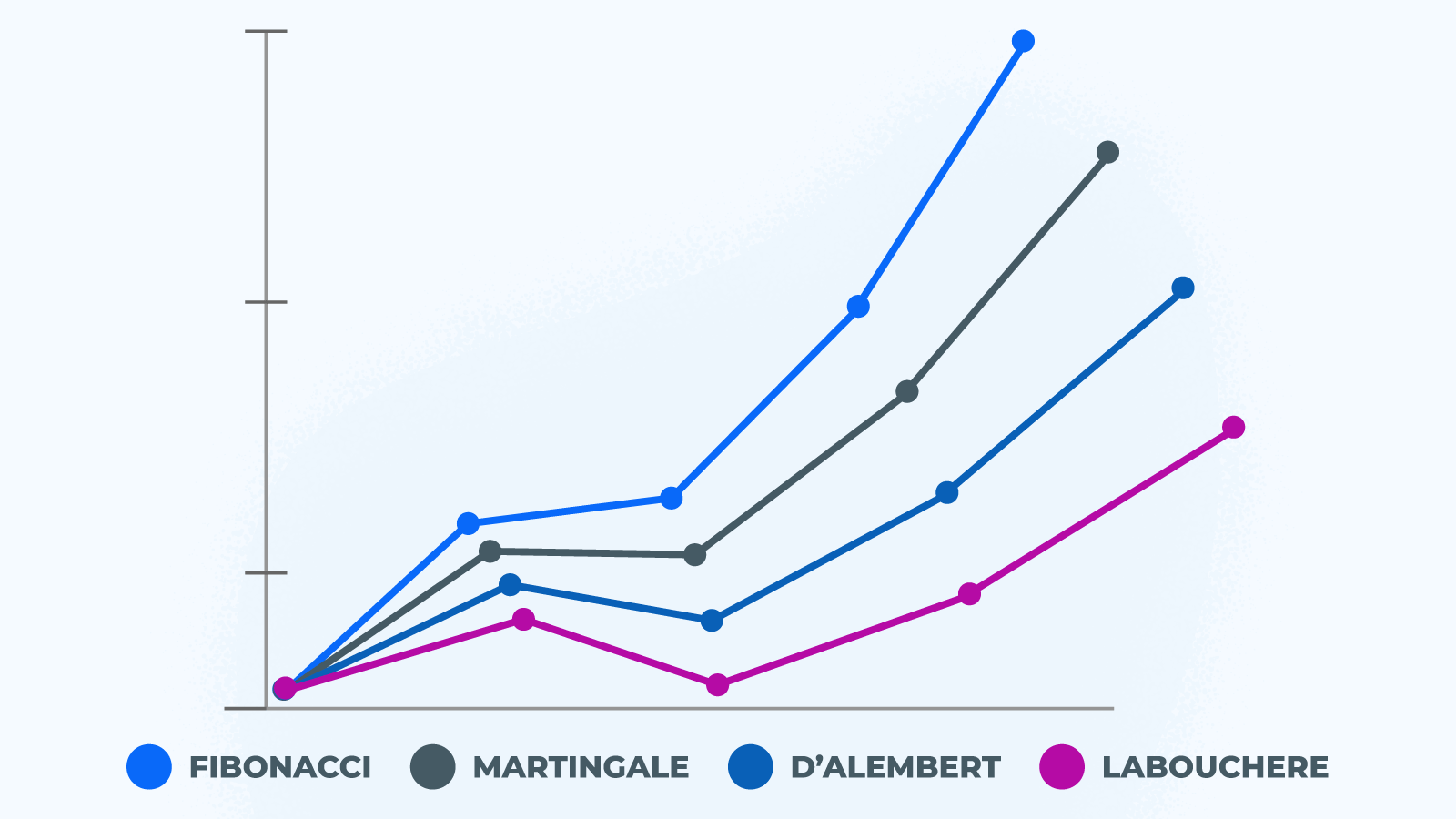
This is a graphic visualization of the Fibonacci system vs other systems:
Helpful Tips for Implementing the Fibonacci Strategy
- Be aware the system won’t improve the default Roulette odds we explain in our designated guide
- Start with the minimum bet available
- Play at European Roulette casinos in Ireland for the best odds
- Check the site’s Terms and Conditions if you’re playing with a bonus
- Even if you’re playing a negative progression, don’t go overboard and know your limits
- Play at a table with high betting limits or start really low
- Avoid Roulettes with more than 1 zeros, such as American Roulette
- You shouldn’t bet for more than 10 rounds using the system or your bets may become too risky
Meet Our Experts

Author
Adela Mariuta
Senior Author & Editor
With 400+ casino reviews written since 2019, Adela Mariuta serves as an Author & Editor at CasinoAlpha. She has tested deposit limits and reality checks at multiple casino brands, deconstructed casino marketing claims, and analyzed bonus fairness.

Recommended Articles

Free Bonus Abuse
Free bonus abuse accusations can have serious consequences beyond just losing your current balance. Our analysis of Irish gambling regulations reveals that casinos share player data, potentially blacklisting you across multiple operators for up to 5 years. The legal definition of bonus abuse encompasses more activities than most players realize, including seemingly innocent actions like strategic game selection.
By Adela Mariuta

Which Slots Winning Method Pays out the Best?
Slots winning methods range from the mathematical to the mystical, with an estimated 65% of regular players following some form of personal system. “Most players desperately want to believe they can outsmart a machine specifically designed to generate profits through mathematical certainty,” notes our gaming expert Adina Minculescu. Through this analysis, you’ll gain clarity on which strategic approaches align with actual slot mechanics and which popular methods are expensive exercises in wishful thinking.
By Anca Iamandi

New Gambling Bill in Ireland
The new Irish gambling bill creates the most significant player protections in Europe, with our analysis revealing stricter measures than even the UK’s gambling reforms. What many don’t realise is that operators will now face penalties of up to €20 million or 10% of turnover for violations, creating real accountability. These sweeping changes will transform everything from bonus offerings to advertising practices across all gambling verticals.
By Anca Iamandi

Can a casino refuse to pay out?
A shocking truth is that around 12% of online casino complaints involve refused payouts each year in Ireland alone. According to our Chief Editor and CEO, Tudor Turiceanu, “Many players don’t realize their exact rights until it’s too late.” By understanding your legal position clearly now, you can protect your winnings effectively whenever a casino refuses to pay.
By Anca Iamandi

Casino Fairness in Ireland
The harsh reality of casino fairness is that many operators implement “near-miss” programming and volatility adjustments that technically maintain stated RTPs while creating artificially frustrating player experiences. Know how to identify truly fair gaming environments and avoid operators using psychological manipulation.
By Adela Mariuta
Most Read
1.