The blackjack insurance approach confuses recreational players who believe insurance protects their strong hands. The mathematical reality reveals why this popular side bet is almost always a poor decision. Check clear scenarios for when to consider insurance and when to decline confidently.
Is Blackjack Insurance Worth It? Facts Every Player Should Know in 2026
By Anca Iamandi
Table of contents
What Exactly Is an Insurance Bet in Gambling?
The insurance bet is a wager on the dealer having a blackjack. It is a side bet offered only when the dealer’s up-fronting card is an Ace. You must stake half of your initial bet, and if the dealer indeed has blackjack, your wager wins at 2:1 odds. If you want to know more about the blackjack odds, you can check out our article.
Important: While insurance might seem like you are insuring, protecting, or otherwise increasing your initial wager’s chances, it has nothing to do with it. It is an entirely different wager. You bet on the dealer having a 10 as a hole card, which may or may not help you break even.
How Does an Insurance Bet Work?
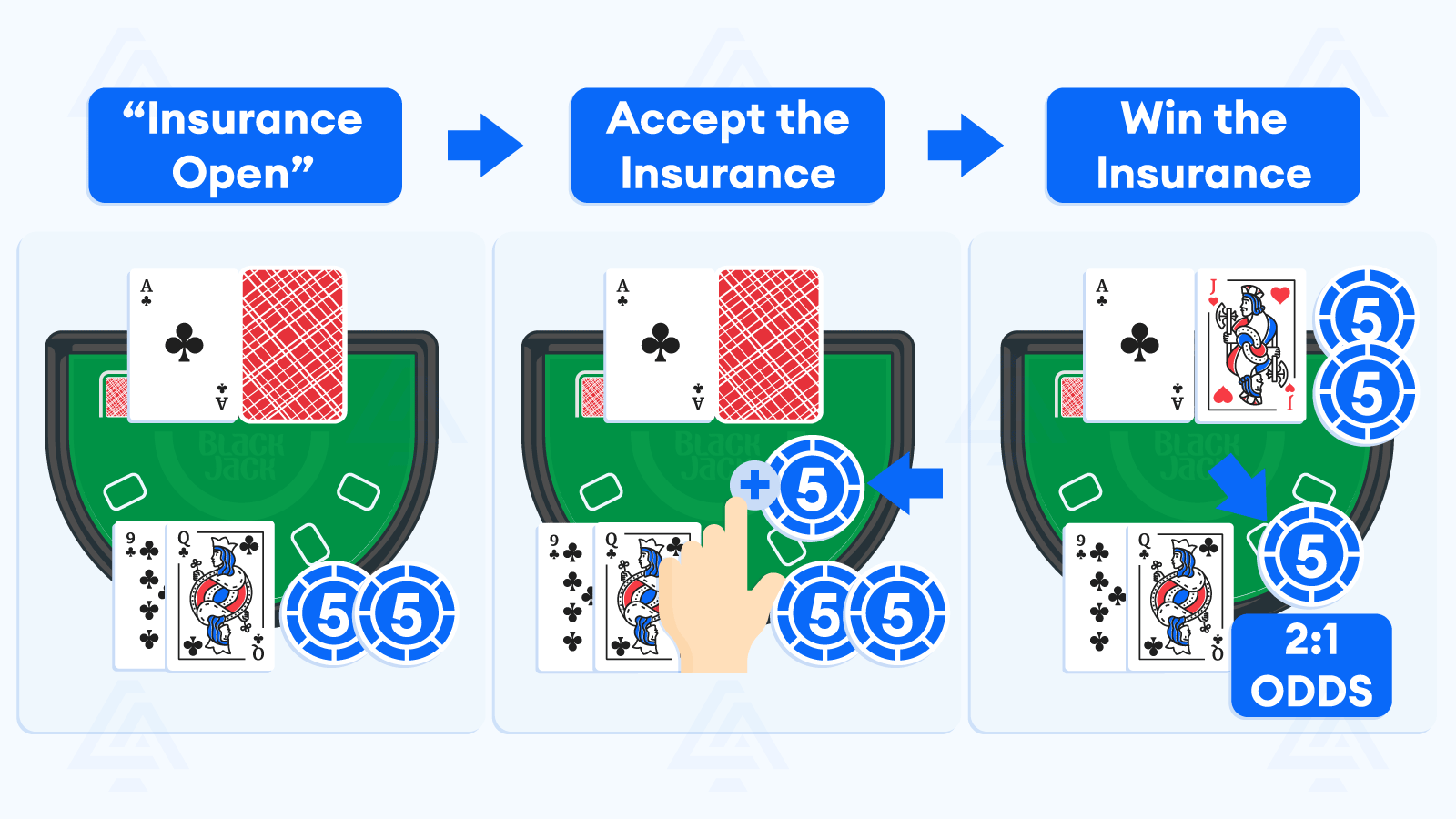
Blackjack insurance is offered for a limited time after the dealer shows an Ace. Here’s how it unfolds:
- The dealer shows an Ace. Usually, shortly after, they say, “Insurance open”
- In live dealer casinos, you see a pop-up or a notification prompting you to take the insurance
- You must accept the insurance side bet before the dealer gets to peek at his whole card
- Once the dealer has seen his hidden card, the offer expires
- You assume it indeed may be a 10-valued card and take the bet
- It turns out your hunch was correct
- The dealer has blackjack, and you win the insurance at 2:1 odds
- However, the initial wager is lost
For example: Let’s say you insure a £10 bet. This means you place an additional £5 bet on the dealer’s hand. Therefore, one or both wagers may be lost. There are 3 scenarios:
- The dealer’s hole card is worth 10 points, and you break even with the insurance
- They don’t have blackjack, and you win your initial bet, scoring a £5 profit
- They don’t have blackjack, but your cards are worthless, meaning you lose £15 on that round
Reasons Blackjack Players Make This Bet
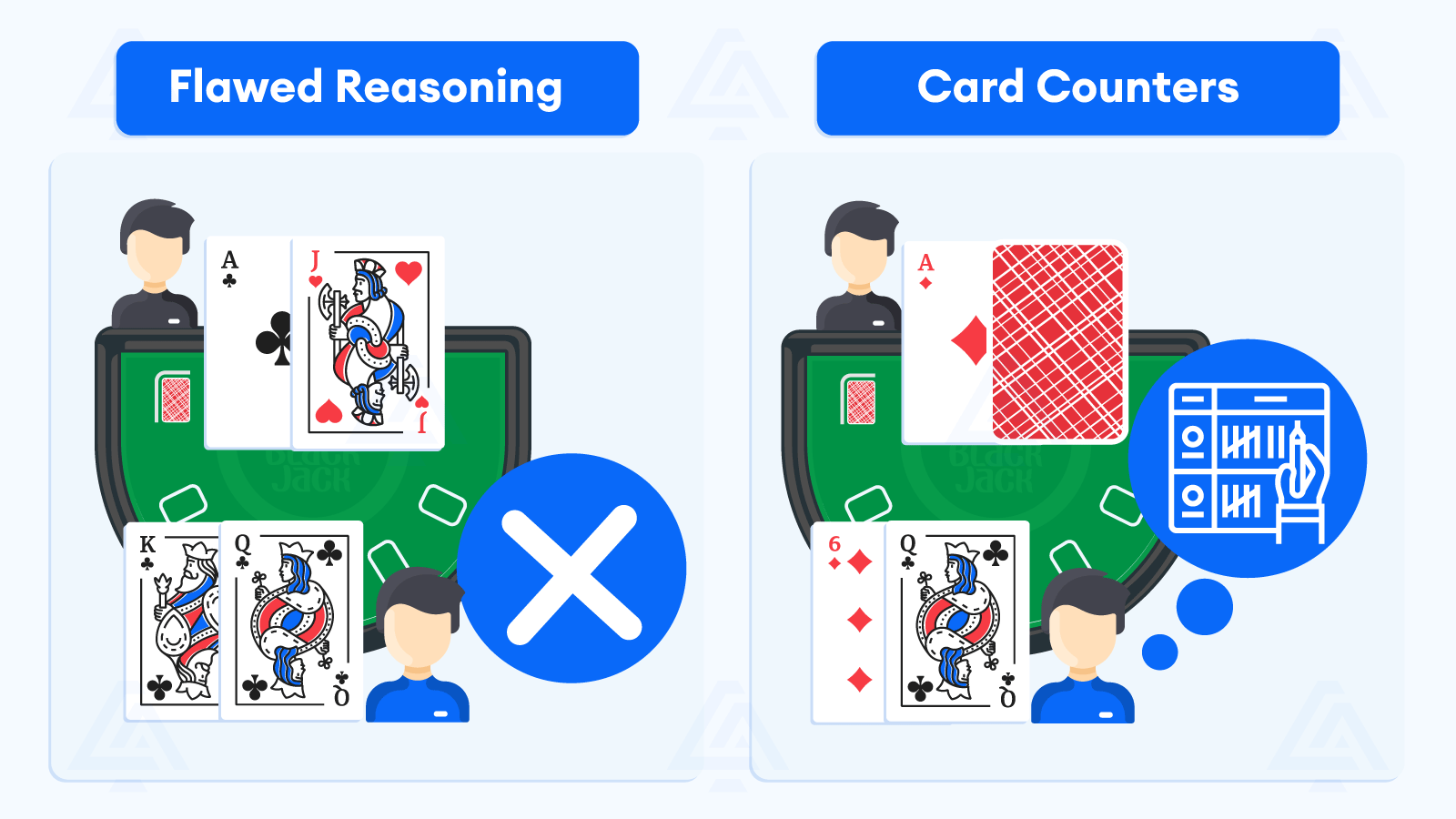
The main aim of blackjack insurance is to break even. However, most players take this bet for one of these two reasons:
- Flawed reasoning
- They are expert card counters
Flawed reasoning
Players sometimes take insurance due to confusion, flawed reasoning, or a complete lack of statistical training. You cannot do without a good understanding of the game if you want to have a chance to succeed when you play on blackjack casino sites. For example, it’s expected that players are misled by the wager’s name, not grasping the rules and meaning of blackjack insurance. Conceptual confusion can make way for some silly mistakes, and using insurance as a betting strategy in itself is potentially bankroll-draining.
The most common error
Novices would insure a 20 point-valued pair rather than a soft 7. They may believe a hand like that gives them a strong position. So, they take insurance. It is indeed strong because it’s close to 21, but it’s not one to insure. Remember, you don’t insure anything. You bet on the dealer’s hole card being a 10-valued card. When you have two 10-point cards, the last thing you want to do is bet that the dealer has another. Even more so when you think the house edge for this bet is close to a whopping 6%. The fact that you have 2 of them significantly reduces the probability that the dealer may have a 10-valued hole card. Generally, the dealer has a 33% chance of hitting blackjack. With each 10 that’s been dealt into play, their opportunities for blackjack drop, and your chances to win the insurance drop as well. Therefore, this betting pattern is not one to follow.
Beware of The Card Counters
Card counters may tweak this side bet to their advantage. They may profit from it by applying various strategies to discern when a 10 or face card is imminent. If you do some research on the subject, you’ll see that many use the Hi-Lo system.
Hi-Lo system Definition
The Hi-Lo system assigns a value to each card to make card counting easier. Cards 2 to 6 are given a +1 value. 7,8, and 9 are valued 0. Cards from 10 to the King have attributed a -1 value. You need to focus on the table and add or subtract the corresponding number. Depending on the current count sum, players take different routes of action in the game, for example, buy blackjack insurance or hit or stand. We won’t dive into the details of card counting. Advanced blackjack strategies cannot be summed up in a few words. Still, these systems essentially count the 10-valued cards on the table and estimate the remaining ones in the deck. Insurance becomes a good bet when more than 50% of the remaining cards are likely to be worth 10 points. However, this technique becomes increasingly tricky when more than two decks are used.
Be aware: Successful card counting may get you banned, as you would pose a risk to the house. This rule applies to live online blackjack casinos, such as IE. Thus, if you’re to use this technique, handle it with care.
The Mathematical Problem Explained
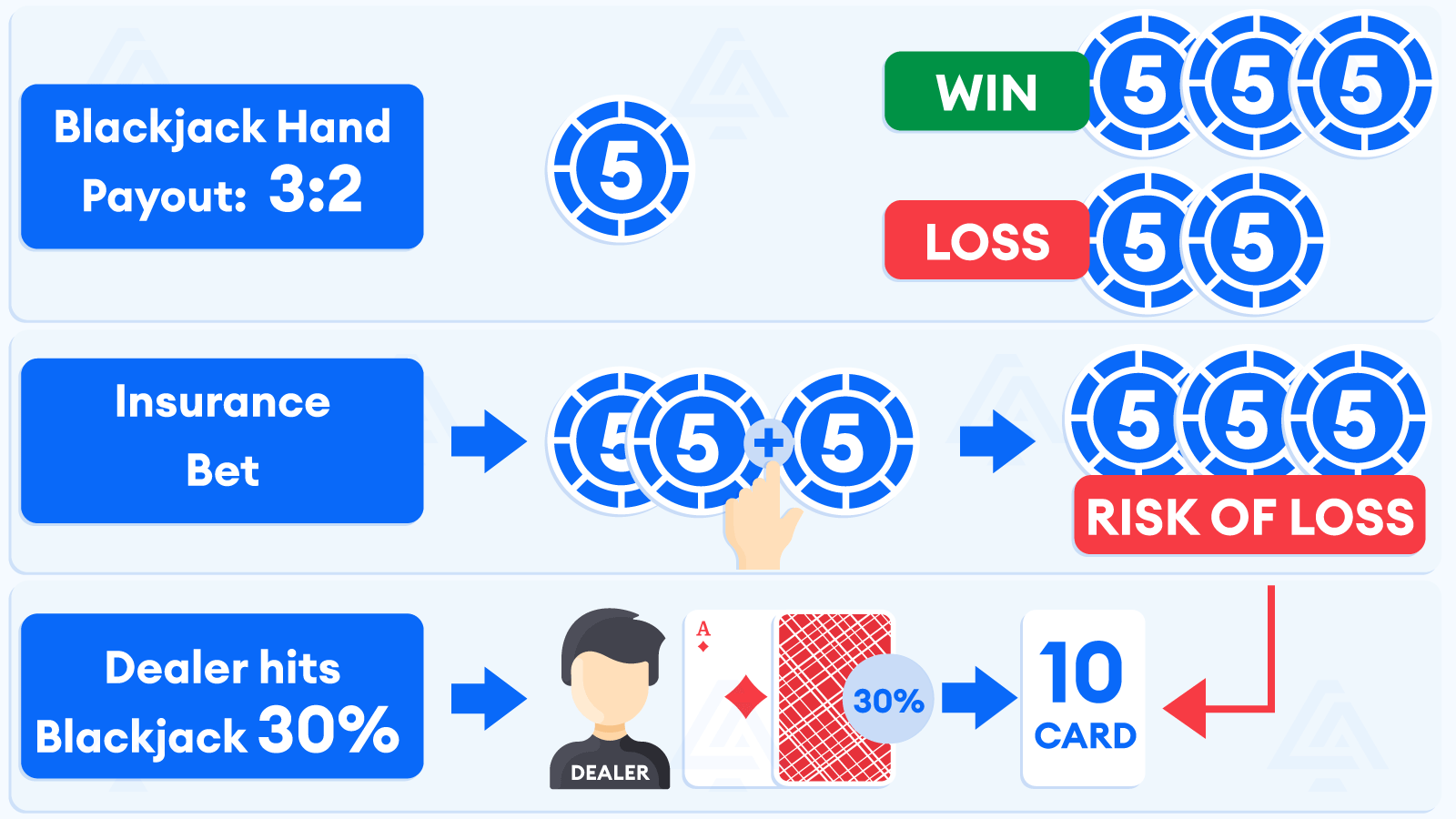
Some players swear on the value of the insurance. However, the expected value long term is negative. The payout for a blackjack hand is 3:2. Thus, with a £10 wager, you may win £15. Conversely, when you make an insurance bet, you pay an extra £5. And you risk losing £15. On average, the dealer hits blackjack just 30% of the time if they show an Ace. This translates to you losing more than 50% of your insurance wagers. You may lose both your initial stake and the insurance bet. That’s why placing too many insurance bets will lose you money in the long run.
Tips: The only chance to get both the initial and insurance bet is to play a variation in which players win blackjack ties. An example would be Super Fun 21. In this variant, a player’s blackjack always beats the dealer’s.The expected value for various types of bets.
Fact: While betting on individual Roulette wheel numbers yields a negative expected value, statistically, it is a better bet than taking the insurance in blackjack.
Smart Alternatives to Taking Insurance in Blackjack
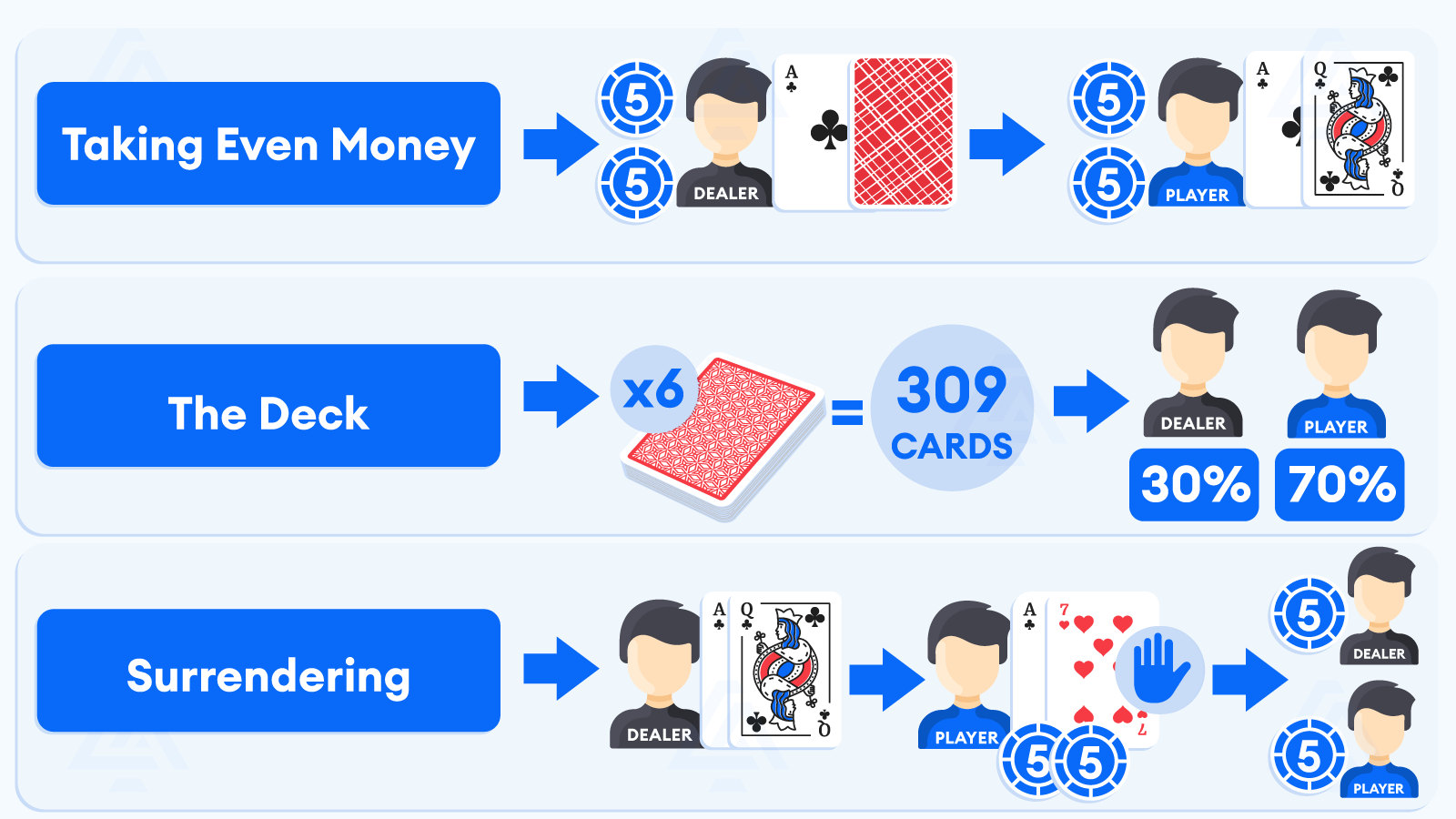
Other bets share similarities with insurance, but an expert knows the differences and the general blackjack rules. Discover how these side bets work and never fall into the casinos’ traps again.
Tips: It’s a known fact that the house edge in blackjack starts at 0.5%, being one of the lowest house edges in this domain. This is an ideal level, and not many reach it. Still, you should at least try to apply a basic strategy – derived from math – to increase your odds.
Taking even money
Even money is a type of side bet that’s sometimes mistaken for blackjack insurance. Remember there were 3 scenarios for insurance, and only one of them was profitable? There’s another possibility. Let’s call it the fourth scenario, where you are dealt a blackjack hand straight from the beginning while the dealer has an Ace. In this case, most will tell you to take even money because it’s a sure win.
Your options
The dealer will offer you even money before peeking at their hole card in situations like this. You have a choice:
- Take even money and secure a 1:1 payout
- Not take even money and have your stake returned if the dealer has blackjack
But the dealers are counting on your mathematical naivety.
Going in-depth
Remember, blackjack pays 3 to 2. That means, for a £20 winning wager, you would get paid £30. Even money bets pay 1:1, so you would win £20. Most players believe that even money, and insurance bets, for that matter, will yield them secure profits. But that’s not the case exactly. Why would a casino pay you to double your stake when the dealer may have a blackjack himself hidden beneath the hole card? This situation would be a ‘push’, and you’d have your stake returned, so they wouldn’t need to pay you anything. Casinos do it because it is more likely that the dealer’s hole card is not 10-valued. Thus, your blackjack hand is worth more than what you’ve initially wagered.
Back to the basics: the deck
Most casinos will use 6 decks, in case you wonder how to split pair in blackjack. That’s 312 cards. Of these, 96 are worth 10 points. Suppose you have a blackjack, and the dealer has an Ace. That leaves 309 cards in the deck, out of which 95 are 10-valued. This brings us to the same percentage as before. 95 out of 309 means approximately 30%. The dealer’s chance to hit blackjack is 30%. That means in 70% of situations, your blackjack hand is a winner, and you get to leave with the full payout of £30. Even if there’s a 30% chance, you will push and have your stake returned in the other 70% of situations you win. That means, in the long run, not taking even money is more profitable.
Tips: Irish online casinos offer you the chance to practice your blackjack skills by playing with a welcome casino bonus. However, be aware that some do not allow you to wager your bonuses in Live Casino. Alternatively, you may invite a few friends over and emulate the casino experience right in your home! Now you see why dealers offer you even money? It’s not at all like they’re being generous.
Surrendering
Another side bet similar to blackjack insurance, but which may prove helpful if you apply basic strategy, is called ‘surrender. Compared to the other two, this one can get you out of tight situations. The Blackjack surrender rule is not the most popular in land-based casinos. However, you’ll find masses of live dealer rooms and other tabletop games that are accepted in the best online casinos. Just type ‘Blackjack Surrender’ into the search bar.
How is it useful?
In essence, blackjack surrender allows you to give up your cards and half of your initial stake when the dealer has an Ace and is about to check his other card for blackjack. The dealer usually has a 30% chance of hitting a blackjack. But what if you have one of those hands in which, anyway, seems the wrong way? For example, a 16. Having 16 points versus the dealer’s Ace is one of the worst situations to be in because:
- If you stand, the hole card can be anywhere between 6-10, and you lose
- If you hit and get any card between 6-10, you also lose
Both cases imply a high probability that you lose. That’s why the surrender side bet can be a wise move where the situation requires it. However, you can apply other strategies, such as the Illustrious 18 or the Martingale Blackjack strategy.
Important Facts to Know About Blackjack Insurance
- Live casino sites allow blackjack insurance bets and accommodate all game variants
- If you know how to count cards, you may see when the right moment is to use insurance
- Most players believe they ‘insure’ their hand, but insurance is a wager on the dealer’s hand.
- Blackjack insurance pays 2:1, but you must stake half of your original bet
- It is helpful in 4 out of 9 cases (30%)
- Blackjack insurance is a wrong choice in the long run because the expected value is negative.
- There are minor differences between insurance and even-money
- However, an even-money proposition should be avoided at all costs
- You reduce the house advantage by not taking even money
- Conversely, even money bets and blackjack insurance wagers increase the house edge
- Surrendering may be helpful with certain hands, usually up to 16
Meet Our Experts

Author
Anca Iamandi
Senior Author & Editor
Anca Iamandi brings linguistics expertise to her role as Senior Gambling Author & Analyst at CasinoAlpha. Since 2019, she has created 300+ casino reviews, evaluated 150+ bonus codes, and created educational content on gambling regulations. Anca specializes in exposing unlicensed operators and identifying hidden clauses in Terms & Conditions.

Recommended Articles

Casino Player Rights and Obligations
Nowadays, players may not be aware of their full legal rights and obligations that come with joining an online casino or opting for certain bonuses. Our guide will walk you through all the player rights and obligations any Irish player should know. You’ll gain clarity on your legal rights and how to effectively navigate disputes with online casino operators.
By Elena Buzincu

iOS vs Android Casino Apps Ireland
When you play at Irish online casinos via your phone, you’ve probably seen that the same casino app performs differently on iOS and Android devices. One might be faster, have better games or drain your battery fast. However, in our guide, we tried to analyse exactly what to expect on each platform. We will help you make the right choice for your device.
By Elena Buzincu

Can a casino refuse to pay out?
A shocking truth is that around 12% of online casino complaints involve refused payouts each year in Ireland alone. According to our Chief Editor and CEO, Tudor Turiceanu, “Many players don’t realize their exact rights until it’s too late.” By understanding your legal position clearly now, you can protect your winnings effectively whenever a casino refuses to pay.
By Anca Iamandi

Scam casinos
Scam casinos target thousands of unsuspecting players across Ireland, with devastating financial consequences. The harsh reality is that most victims overlooked clear warning signals because they weren’t informed enough. By reading this detailed legal guide, you’ll gain essential knowledge enabling you personally to recognize scam signs early on.
By Adela Mariuta

Responsible Gambling Institutions
Ireland’s responsible gambling institutions offer access to a great array of support options, as the data reports show that recovery programs guided by specialists tend to be 5 times more effective than trying to address problem gambling by yourself. Many people live with the impression that getting professional help is only necessary in extreme cases, when, in fact, early intervention prevents major financial and psychological damage.
By Anca Iamandi
Most Read
1.