March 2025 marked a historic transformation for the gambling industry in Ireland, as the Gambling Regulatory Authority of Ireland, also known as GRAI, was established.
Ireland's GRAI Licensing: How the New Gambling Authority Works
By Adela Mariuta
Table of contents
- What Is GRAI? Ireland’s New Gambling Regulator
- GRAI’s Structure and Powers
- GRAI Licensing Types: B2C, B2B, and Charitable
- Phased Licensing Timeline: When Operators Get Licensed
- How to Apply for GRAI License: Operator Requirement
- What GRAI Checks: Licensing Standards
- GRAI Enforcement: What Happens If Operators Don’t Follow Requirements
- How Irish Players Benefit from GRAI Regulation
- Which Operators Are Getting GRAI Licenses?
- Transition Period: What’s Happening Now (2026)
- How to Verify If a Casino Is GRAI-Licensed
- GRAI vs Other Regulators: How Ireland Compares
- Social Impact Fund: Operators Fund Problem Gambling Treatment
- Summary: GRAI and Ireland’s New Gambling Regulation
What Is GRAI? Ireland’s New Gambling Regulator
The Gambling Regulatory Authority of Ireland, also known as GRAi, is Ireland’s first independent gambling authority, which was established on March 5, 2025. The gambling regulatory body was established under the Gambling Regulation Act 2024[1].
GRAI is a welcome replacement for a previously fragmented system where Revenue Commissioners were only able to ensure standard betting licenses without prioritising consumer protection.
What is GRAI’s Mission?
GRAI’s mission consists of licensing and regulating all the gambling processes in Ireland, which include online casinos, sports betting, and land-based gambling, as well as some specific lotteries. GRAI is also in charge of the National Gambling Exclusion Register, universally known for the self-exclusion system.
Their main priorities include protecting gambling consumers, with a great emphasis on children and vulnerable people. They try to ensure that all gambling processes are fair, without any fraudulent activities. Also, it is their mission to monitor advertising in order to prevent players from falling for manipulative marketing tactics.
GRAI represents an important step forward for Irish gambling regulations, from what was once a minimal oversight focused solely on tax collection to a genuinely helpful regulatory body meant to coordinate the enforcement power, with a special focus on the public health relationship with gambling activities.
GRAI: An Overview
Disclaimer: Our article is meant to provide educational information about the Gambling Regulatory Authority of Ireland under the Gambling Regulation ACT 2024, starting from January 2026. This is not legal advice, and should not be treated as such. All the licensing requirements and timelines presented here are subject to change.
In order to receive official guidance, our team recommends that you get in touch with grai.ie or with a qualified solicitor.
GRAI’s Structure and Powers
The Authority operates as an independent body with significant regulatory and enforcement powers granted under Act 2024.
Governance Structure
- Board of Directors: They are appointed by the Minister for Justice, and are responsible for offering a strategic direction towards decision-making. They are also responsible for coordinating the CEO and staff. In order to become a board member, one must have extensive expertise in licensing, consumer protection practices, the gambling industry, law, or public health.
- Chief Executive – Anne Marie Caulfield: She is in charge of leading everyday operations and implementing the board’s decisions. She is also supposed to manage the process of licensing, monitor regulatory compliance, and also represent GRAI publicly. She is accountable to Oireachtas (Irish Parliament) committees.
- Staff: GRAI is currently building a team of licensing specialists and officers who monitor regulatory compliance. Their team includes legal advisors, consumer protection experts, and research analysts. The main target for 2026 is to fill all the staff positions in order for the team to properly handle the licensing volume of Irish gambling establishments.
- Funding model: It is self-financed through receiving fees from issuing casino licenses for gambling companies, which include application fees and annual renewal fees. GRAI’s operations are also funded by a percentage of brands’ gross revenue, as well as by the Social Impact Fund contributions, which makes sure gambling brands offer funds towards the research and implementation of problem gambling treatment.
GRAI’s Regulatory Powers
- Licensing authority
Those enforcing licensing authority have the right to grant, renew, vary, suspend, and revoke issued gambling licenses. They also have the authority to set license rules and standards that all gambling brands must follow.
They also must keep a public register of licensed gambling brands.
- Compliance monitoring
Those enforcing this power will need to conduct inspections and audits for licensed betting brands, verifying their online systems, financial records, and responsible gambling tools. They have the power to request information and evidence for licenses. They also have the role to test gambling brands’s fariness provided by the RNG certified verifications.
- Enforcement powers
Those who enforce this power should issue licensing notices requiring gambling brands to fix any existing or potential violations. They can impose financial penalties, which consist of fines up to €5 million for serious breaches.
They can suspend licensing, reflected by a temporary operating ban, as well as revoke licenses permanently for severe cases. Unlicensed casino brands can also be prosecuted, with fines going up to €300,000, as well as potential imprisonment.
- Consumer protection
Those who enforce the operation of the National Gambling Exclusion Register. They are in charge of investigating player complaints and can order gambling brands to pay players if violations are confirmed. They also have the responsibility to publish enforcement actions for public accountability purposes.
- Research and education
Those who enforce it have the responsibility to research the potential harm. A proof of this enforcement is GRAI having commissioned an ESRI study on childhood gambling exposure, published in 2025. They have the responsibility to develop public awareness campaigns and provide access to gambling harm education resources.
GRAI Licensing Types: B2C, B2B, and Charitable
GRAI issues three main license categories under Act 2024, with each option covering different gambling activities and business models.

Business to Consumer (B2C) Licenses
Among the gambling operators who need a B2C license, we can mention the operators providing gambling services directly to players, which include online casinos, sports betting sites, land-based bookmakers, bingo halls, and gaming arcades.
B2C license types
Betting licenses:
- Remote Betting License, which is meant for online and mobile sports betting
- In-Person Betting License, which is aimed at land-based bookmakers
- Remote Betting Intermediary License, which is used for betting exchanges like Betfair
Gaming licenses:
- Remote Gaming License, which is issued by an online casino that hosts slots, table games, and live dealer sites
- In-Person Gaming License, which is meant for land-based casinos and gaming arcades
Lottery licenses:
- Remote Lottery License, which should be used for online lottery games
- In-Person Lottery License, which can be used for land-based lottery sales
Note: Combined licenses for in-person and remote services will be available later. Currently, the brand must apply separately for each type as the transition happens.
Business-to-Business (B2B) Licenses
Companies that supply gambling products or services to B2C operators need to receive a B2B license. These include game developers, software providers, payment options, platform providers, and affiliate marketers.
B2B license covers:
- Gambling software or platforms
- Game content, which includes slots and table games
- Payment processing services
- Affiliate or marketing services
- Odds compilation services
- Customer verification services
B2B licensing matters because it ensures that gambling systems meet Irish standards. Game providers have the responsibility to certify that their games are fair and RNG tested. Payment processors must also comply with anti-money laundering initiatives. As for the affiliates, they have the obligation to follow advertising restrictions.
Charitable and Philanthropic Licenses
Charitable and philanthropic licenses are needed by non-profit organizations that run fundraising lotteries, raffles, or bingo for charitable purposes.
They aim to provide a simplified process for obtaining licenses, since such regulations impose lower fees, streamlined application and less stringent requirements than commercial B2C licenses. By providing such licenses, Ireland ensures that charities are able to fundraise through gambling without excessive licensing complications.
Phased Licensing Timeline: When Operators Get Licensed
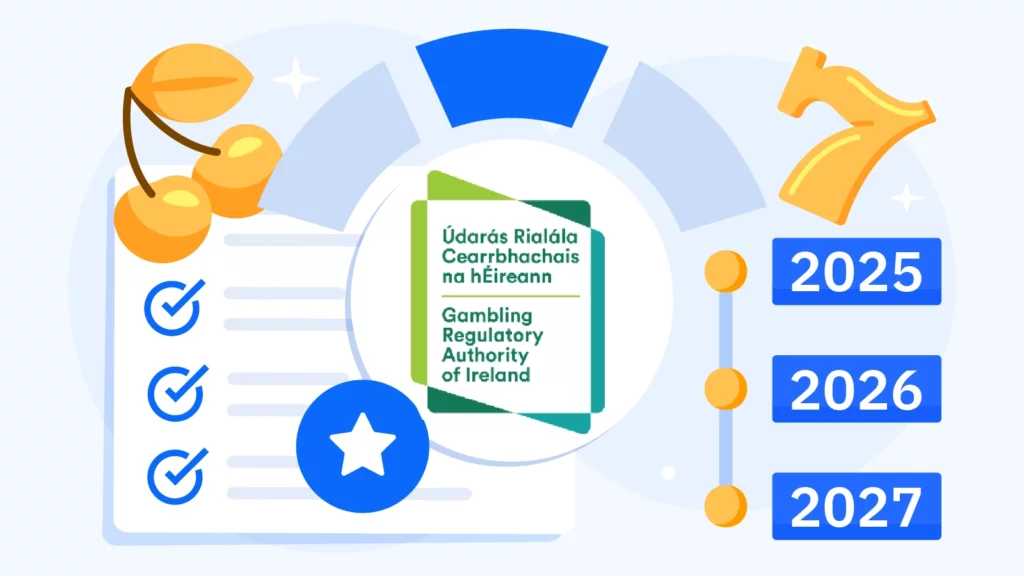
GRAI is implementing licensing in phases throughout 2026-2027 to manage application volume and allow a smooth transition from the old process.
Current status (January 2026)
- Phase 1 involves the period when remote betting applications shall be processed. Several major sports betting companies have already applied, including Paddy Power, Boylesports, and Bet365. The first licenses are expected to be issued in the first quarter of 2026.
- Phase 2 shall be critical for casino players since remote gaming licenses for online casino applications open between the first and second quarter of 2026. Casino brands like 888, LeoVegas, and Casumo are expected to apply then, and the licenses should be issued in the second and third quarters of 2026. By the fourth quarter of 2026, the most significant online casinos operating in Ireland should be GRAI-licensed.
How to Apply for GRAI License: Operator Requirement
Gambling brands that want to serve Irish players must follow a thorough application process, demonstrating their compliance with the standards imposed by the Act 2024.
Application Process (B2C Remote Gaming Example)
Step 1: Pre-Application Preparation
The first step of the process is for gambling brands to review the licensing guidance protocols, published at grai.ie/licensing-regulation. Then, casino brands must gather the required documents, which include corporate structure details and financial statements for the past 3 years. Moreover, brands must put together their responsible gambling policy and anti-money laundering procedures, as well as the process of handling customer dispute resolutions.
Step 2: Public Notice (if required)
Casino brands are required to publish public notices of intention to apply in order to obtain specific license types, such as those for in-person premises. This process is meant to allow community objections, similar to the potential ones for liquor licensing.
Step 3: Application Submission
Gambling brands must submit their applications via GRAI’s Operator Portal. They will be required to pay the application fee, which varies according to the license time, with remote gaming licenses usually ranging between €10,000-25,000. All the required documents must be uploaded.
Step 4: GRAI Assessment
GRAI shall review the application for completeness and then proceed to conduct background checks on beneficial owners, such as checking criminal records and financial probity. Then, GRAI will receive the responsible gambling measures, and evaluate the procedures for AML compliance.
Step 5: Decision
If the casino brands follow all the instructions, GRAI shall grant them licenses. If there are any gaps, the gambling authority may require additional information or refuse specific applications if they fail the required high standards. It usually takes around 90-180 days for GRAI to decide for complex B2C applications.
Step 6: License Issued
As the last step of the process, gambling brands will receive GRAI licenses and the conditions they must follow from then on. The brand shall be added to the public licensing register and can legally provide gambling licenses to players after the GRAI logo is added to the website.
What GRAI Checks: Licensing Standards
GRAI always assesses gambling brands against its stringent standards, which cover different aspects, such as financial stability, consumer protection, and social responsibility.
Financial Probity
GRAI always verified the following:
- Whether or not gambling brands have enough financial resources to pay players’ earnings
- Whether or not gambling brands have financial statements as proof of stability
- Whether or not the owners of a gambling brand are disclosed in a transparent manner
- Whether or not the brand has a history of financial fraud or insolvency
In order to ensure the protection of players’ deposits, GRAI requires that gambling brands maintain separate customer accounts, so the player funds stay separate from operational funds. This way, the players’ funds are protected and can be returned in the case of bankruptcy.
Technical Standards
- Game fairness: In order to ensure the fairness of game outcomes, all the games offered by casinos licensed by GRAI must use certified RNGs tested by independent parties such as eCOGRA, iTech Labs, and GLI. Also, the RTP percentages should be disclosed in order to remain accurate.
- System security: The security is enforced by GRAI by requiring licensed brands to use SSL encryption systems for websites and transactions. Moreover, licensed operators are required to secure the storage of data according to GDPR rules. Also, brands must ensure the protection of players against hacking or DDoS attacks. GRAI shall perform regular security audits in order to make sure the requirements are fulfilled.
- Age verification: Licensed gambling brands must ensure no underage individuals can take part in wagering activities. Hence, gambling sites must ensure government ID verifications before withdrawals happen. Brands must ensure constant monitoring to combat underage access threats. See our article where we talk about the legal age of gambling in Ireland.
Responsible Gambling Requirements
There are several responsible gaming resources that all GRAI-licensed casinos must provide:
- Loss limits
- Session time limits
- Reality checks which must be suggested through periodic notifications (periodic notifications)
- Self-assessment questionnaires
- Access to account history
- Self-exclusion options
- Integration with the National Gambling Exclusion Register
Moreover, the licensed casinos must have trained staff meant to identify problem gambling signs and offer help resources. Access to links prominently displayed towards gambling helplines must also be ensured.
Advertising and Marketing Standards
Restrictions imposed by GRAI under Act 2024 for its licensed gambling brands are the following:
- No advertising is permitted at gambling sites for individuals under 18, which includes no ads added to children’s programmes
- Time restrictions must be put in place, which include no gambling ads during children’s TV hours
- Content restrictions must be enforced to make sure there is no glamorization of gambling
- Limits of sponsorships must exist for sports teams, and even sponsorships
- No misleading advertising should ever exist at licensed casinos, so the bonuses must have clear stipulations, no misleading free money claims
GRAI shall always monitor its licensed casinos’ activity through media surveillance and player complaint investigation.
GRAI Enforcement: What Happens If Operators Don’t Follow Requirements
There are fixed stipulations set for licensed operators that don’t follow GRAI’s stipulations, from warnings to criminal prosecution, depending on the severity of the misconduct:
Minor violations
For minor cases, such as the first offense of technical non-compliance, there are several punishments that must be put in place:
Gambling brands may receive a written warning in order to fix the issue within a specified timeframe
Guidance must also be ensured, so GRAI has the mission to further guide brands to achieve compliance
No public disclosure should be made if licensed brands successfully fix the issue promptly
Moderate violations
For mid cases of repeated non-compliance cases where consumer harm was done, there are several actions that can be taken:
- Brands can be applied vinancial penalties between €10,000-€500,000 depending on severity
- Additional license conditions can be applied to brands, such as additional reporting requirements
- Such violations will lead to public disclosure, as the penalties will be published on GRAI’s website
- License conditions added (additional reporting, enhanced monitoring)
- Public disclosure (violation published on GRAI website)
Serious violations
- For major misconducts where consumers are potentially harmed, such as fraud or money laundering, the following measures must be taken:
- The gambling brand’s license can be suspended, which is the equivalent of a temporary ban until issues are resolved
- Financial penalties up to €5 million can be applied
- GRAI will proceed with a public, detailed disclosure of the penalty
- For criminal activity, a referral to the Garda Síochána (Irish police) can be issued
Extreme violations
For persistent serious breaches or cases of criminal enterprise, the following actions can be taken by GRAI:
- The license can be revoked, resulting in a permanent ban from the Irish market
- The brand can be criminally prosecuted, with potential punishments ranging from criminal fines up to up to €300,000 to potential imprisonment for individuals
- The gambling brand’s assets can be seized
- The operator can be banned from obtaining licenses in the future
Unlicensed operators
GRAI can make an application to the High Court for orders directing unlicensed brands to stop operating. The licensing body can request ISP to block unlicensed sites and can get in touch with banking processors to block transactions.
How Irish Players Benefit from GRAI Regulation
As the industry of gambling makes the transition from unregulated international wagering to the market of GRAI-licensed brands, Irish players will receive layers of protection that were unavailable until now.
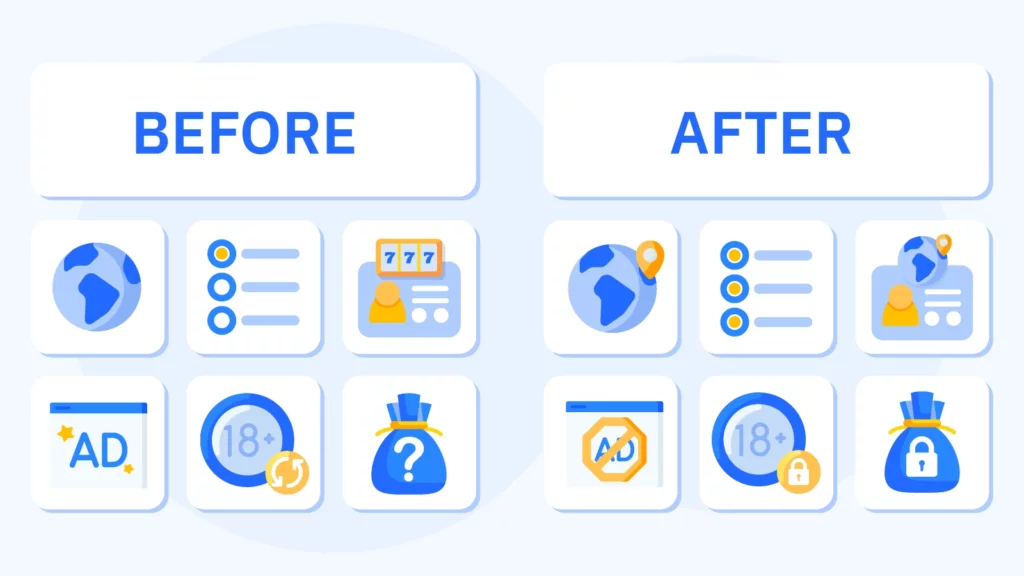
Before GRAI (pre-2025)
Players used to play at internHow Irish Players Benefit from GRAI Regulationational casinos with no regulations in place for Irish users. If the casino brand refused to issue payments, no Irish authority could step in. Players had to file complaints to the casino’s licensing authority, which could only result in a slow international process.
There were also no mandatory responsible gambling tool requirements. Moreover, there were no restrictions on advertising practices. Similarly, no national self-exclusion programs were available for gamblers.
With GRAI
Gamblers can now play at GRAI-licensed casinos, benefitting from Irish licensing protection. If a casino brand refuses payments, gamblers can complain to GRAI, which shall take the case to an Irish jurisdiction, which can lead to a faster resolution than before.
There are also mandatory responsible gambling tools in place for all the licensed casinos. Restrictions for advertising actions are also in place in order to protect minors and reduce saturation.
For self-exclusion, gamblers can be part of the National Gambling Exclusion Register, which results in a registration block for all licensed casinos.
Which Operators Are Getting GRAI Licenses?
Major gambling brands operating on the Irish market are applying for GRAI licenses throughout 2026 to maintain legal access to Ireland’s 5 million population of players.
Irish gambling brands (certain to license):
- Paddy Power/Betfair
- Boylesports
- BoyleCasino
UK gambling brands (highly likely to be licensed):
- Bet365
- 888 Holdings
- William Hill/Entain
- Sky Betting & Gaming
- Ladbrokes/Coral
International brands (likely):
- LeoVegas
- Casumo
- PokerStars
- Unibet
Uncertain brands:
- Smaller international casinos may not exist in the Irish market since licensing costs may not be worth the small Irish revenue
- Crypto-only casinos may not be initially regulated by GRAI
- Curaçao-only licensed casinos are unlikely to meet GRAI standards
By the end of 2026, we can expect 30-50 GRAI-licensed online casinos operating in Ireland
Transition Period: What’s Happening Now (2026)
Ireland is in active transition from an unregulated to a fully licensed market. Currently, casino brands, players, and GRAI are navigating the licensing implementation together.
For Casino Brands
For gambling companies currently operating in Ireland, they can apply for a GRAI license. They will need to submit an application in the required timeframe, and they will continue operating in Ireland until their application is reviewed. If the gambling brand receives approval, it will become GRAI-licensed. If their licensing is refused, they must exit the Irish market.
Their other option is to exit the Irish market, which may be the case for small casinos that may be unable to meet GRAI standards. They may stop accepting Irish players rather than apply for a license. Players at these casinos should withdraw funds and switch to another brand which apply for GRAI licensed.
For Irish Players
They should continue playing at the current casinos, preferably at international sites licensed by the UKGC or MGA, during the transition. Gamblers should then monitor which casinos are applying for GRAI licenses, and which get accepted. They should get prepared to switch to GRAI-licensed alternatives if the casino one plays at doesn’t get licensed. Then, they should withdraw funds from casino sites exiting the Irish market.
Transition deadline: GRAI hasn’t announced a hard cutoff date for unlicensed operators (likely late 2026 or early 2027). After the deadline, unlicensed operators serving Ireland face prosecution and blocking.
How to Verify If a Casino Is GRAI-Licensed
Once GRAI licensing is fully operational, after the third or fourth quarter of 2026, verifying a casino’s license in Ireland becomes essential.

Step 1
- Check the casino’s website
- Look for the Licensed by GRAI” statement in the footer of the website
- See where the GRAI logo is displayed
- Look up where the license number is shown
Step 2
- Visit the official GRAI platform https://www.grai.ie
- Navigate to the Register of Gambling Licensees
- Search the casino name or license number
- Confirm the match
Step 3
Check the license type accordingly, since the B2C Remote gaming license can serve Irish players online, and the B2B licenses can be applied to suppliers only. As for the Charitable licenses, they can be applied for fundraising purposes.
Red Flags
People should consider staying away from casinos claiming they are Irish licensed but aren’t on the GRAI register. Moreover, the absence of a GRAI logo, once its presence is mandatory, is considered a red flag.
GRAI vs Other Regulators: How Ireland Compares
Irish players familiar with the UK Gambling Commission or Malta Gaming Authority will notice similarities and differences in GRAI’s approach.
GRAI seems to be adopting the UK strict regulation style, drawing inspiration from UKGC’s 20 years of experience rather than Malta’s more friendly approach towards gambling brands. We expect GRAI to closely mirror UKGC, with Irish-specific adaptations.
Social Impact Fund: Operators Fund Problem Gambling Treatment
As a unique feature of Act 2024, the Social Impact fund requires licensed casinos to contribute to treating problem gambling and to the research and education towards this cause.
In order to cooperate with these requirements, GRAI-licensed brands are required to pay a levy, which refers to a percentage of their revenue to the Social Impact Fund. The funds received shall finance problem gambling treatment programs, potential research on gambling harms, and public awareness campaigns.
This measure is similar to the UK’s voluntary levy, where gambling brands can contribute to the GambleAware charity. However, the levy is mandatory in Ireland.
Benefits for Irish Players
Players will have access to treatment and support services funded by the gambling industry itself, not taxpayers. This measure is meant to ensure responsible gambling measures are available for problem gamblers seeking help.
Summary: GRAI and Ireland’s New Gambling Regulation
- GRAI was established in March 2025 as Ireland’s first independent gambling licensing authority.
- The Gambling Regulation Act 2024 was released as a comprehensive framework replacing the 1931-1956 outdated laws.
- Multi-phased licensing procedures shall take place between 2026 and 2027.
- Three license types shall be issued: B2C licenses for gambling brands, B2B licenses for suppliers, and Charitable licenses for fundraisers.
- Strict standards shall be put in place in order to ensure financial safety, technical restrictions, and the implementation of responsible gambling tools.
- Players who self-exclude will have access to apply to the universal register, blocking all licensed operators.
- For gambling brands that don’t follow regulations, there are multiple national sanctions options, including fines up to €5M, license suspension or revocation, as well as prosecution of unlicensed companies.
- Players will receive several benefits once the transition ends, including being able to address casino disputes in Irish juridictions, access mandatory responsible gambling tools, have the guarantee of their funds being segregated from brands’ operational bank accounts, and avoid advertising saturation.
- The transition period must be completed by late 2026-2027. Brands that fail to obtain a license with GRAI must exit the market.
- Afterwards, players must check the GRAI register at grai.ie to confirm whether or not a casino is licensed.
Sources
- Gambling Regulation Act 2024, Number 35 of 2024, Irish Statute Book https://www.irishstatutebook.ie/eli/2024/act/35/enacted/en/html
- GRAI, Business to Consumer Licenses (B2C) https://www.grai.ie/licensing-regulation/business-to-consumer-licenses
- GRAI, Business to Business Licences (B2B) https://www.grai.ie/licensing-regulation/b2b
- GRAI, Official Website https://www.grai.ie/
Meet Our Experts

Author
Adela Mariuta
Senior Author & Editor
With 400+ casino reviews written since 2019, Adela Mariuta serves as an Author & Editor at CasinoAlpha. She has tested deposit limits and reality checks at multiple casino brands, deconstructed casino marketing claims, and analyzed bonus fairness.

Recommended Articles

Most Popular Casino Games in Ireland
In Ireland, slots are the most popular casino game, while table games and live casino games are the close second and third gambling preferences. We’ve defined these games and explored what features make them so popular.
By Anca Iamandi

Bankroll Management for Irish Casino Players
In our news guide, we will teach you the best bankroll management to safeguard your funds like a casino professional when you play at Irish casinos in %an%. This method to safeguard your funds was developed by CasinoAlpha’s team in our 10+ years of experience.
By Adela Mariuta

Responsible Gambling Institutions
Ireland’s responsible gambling institutions offer access to a great array of support options, as the data reports show that recovery programs guided by specialists tend to be 5 times more effective than trying to address problem gambling by yourself. Many people live with the impression that getting professional help is only necessary in extreme cases, when, in fact, early intervention prevents major financial and psychological damage.
By Anca Iamandi
RTP Guide: Read Before Playing!
Return to Player (RTP) percentages don’t tell the whole story. Our analysis found a 10% difference between advertised RTP and actual player returns in many Irish casinos, caused by volatility, hit frequency, and session variance. This Irish guide explains what RTP really means for your gameplay, shows how to calculate actual RTP vs theoretical, reveals which games have genuinely high returns (99%+), and teaches you how to use RTP when evaluating casino bonuses. Set realistic expectations.
By Adela Mariuta

Complete guide to self-exclusion
Self-exclusion blocks your access to Irish casinos for 6 months to 5 years, but 60% of users return to gambling within a month without additional support. The tool works best when combined with counseling, blocking software, and environmental changes. See how self-exclusion works, which programs are available (GamBan, site-specific bans), how to activate them, and what additional steps prevent relapse. Learn how to use self-exclusion effectively for long-term results.
By Anca Iamandi
Most Read
1.